Biomineralization underpins mechanical digestion. Biomineralization could even be a driving force behind humanity’s journey to Mars. Simply put, biomineralization is the process by which living organisms produce minerals to form hard or rigid structures. Let’s unpack that.
At its core, living organisms—often bacteria—extract ions (charged particles) from their surroundings, much like a chef carefully selecting ingredients in a bustling marketplace. These ions include calcium, phosphate, silica, and others. Within these organisms, proteins and enzymes—ubiquitous in all living things—meticulously regulate where and how these minerals precipitate, often producing highly organized and intricate structures. This precision results in materials with specific shapes, patterns, and textures that are extremely difficult to replicate synthetically. Because these structures are tightly orchestrated, they exhibit remarkable stiffness.
The most familiar example of biomineralization in humans is our teeth, the primary tools for mechanical digestion. Humans aren’t born with a full set of 32 teeth; in fact, infants generally develop their first teeth between four and seven months of age. Within these initial months, biomineralization constructs structures so robust that improper handling could cause injury to the feeder—a testament to its potential and precision. Beyond teeth, other examples include seashells and bones, highlighting the diversity and significance of biomineralization across species.
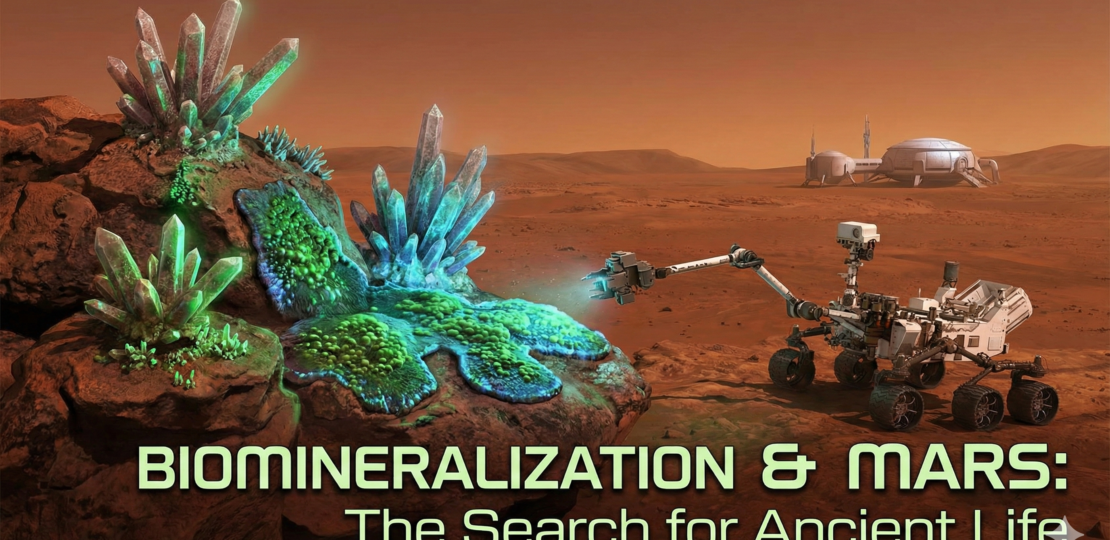
So how might this help humanity on Mars? One of the major obstacles in Martian colonization is the prohibitive cost of transporting materials from Earth, combined with uncertainty regarding their durability in such an extreme environment. By harnessing biomineralizing microbes on Mars, it becomes feasible to synthesize bricks, stones, and other construction materials in situ. Essentially, this approach is like 3D printing, but with living organisms performing the work.
Biomineralization offers not just a fascinating biological process, but a potential blueprint for sustainable living on another planet. Ultimately, the takeaway is striking: life itself could lay the groundwork for human life beyond Earth.
RELATED POSTS
View all