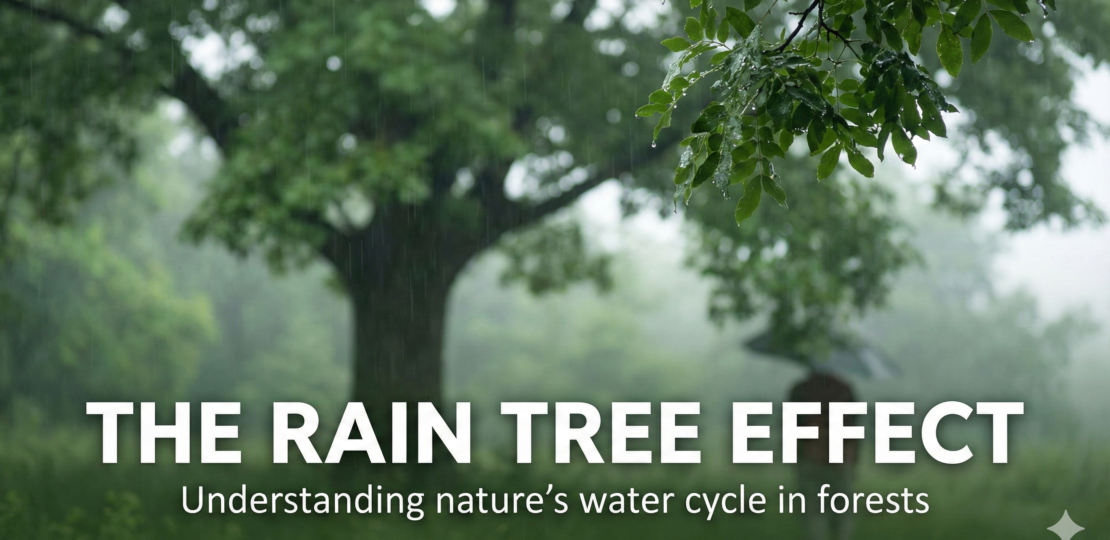
Walk under a massive old tree on a hot afternoon and you might feel a little cooler, a little calmer. That part isn’t surprising. What is surprising is that some trees seem to create their own tiny “weather,” releasing moisture into the air so efficiently that they form a faint mist—a kind of personal, pocket-sized cloud.
This quirky phenomenon has shown up in forests from South America to Southeast Asia. People noticed that certain large canopies—especially from trees like the Samanea saman, often nicknamed the rain tree—seemed to generate a gentle haze above them during still, humid conditions. It wasn’t rain, and it wasn’t fog. It was something more subtle and beautifully strange.
The science behind it? Leaves “sweat.” Through a process called transpiration, water is pulled up from the roots and evaporated through tiny pores, cooling the leaf and releasing vapor. But when the tree is large, dense, and growing in moist air, that vapor can accumulate, condense, and hang above the canopy like wisps of cloud. Early botanists in the 19th century, including Asa Gray, wrote delighted field notes about these miniature atmospheric tricks, unsure whether to classify them under plant biology or meteorology.
This effect doesn’t change global weather patterns, but it shapes the microclimates beneath forest giants—cooling the air, nourishing nearby plants, and reminding us how deeply alive ecosystems are. The next time someone says plants just sit there, unmoving and unremarkable, remember: some of them literally make their own clouds just because they can.
RELATED POSTS
View all