A shadow looks like the simplest thing in the world—just a dark patch trailing behind you like a timid pet. Yet the moment you really look at it, the edges blur, the colors shift, and sometimes the whole thing seems to glow instead of darken. It’s one of those tiny, everyday puzzles the universe slips under our radar. The world isn’t careless; it’s just marvelously subtle.
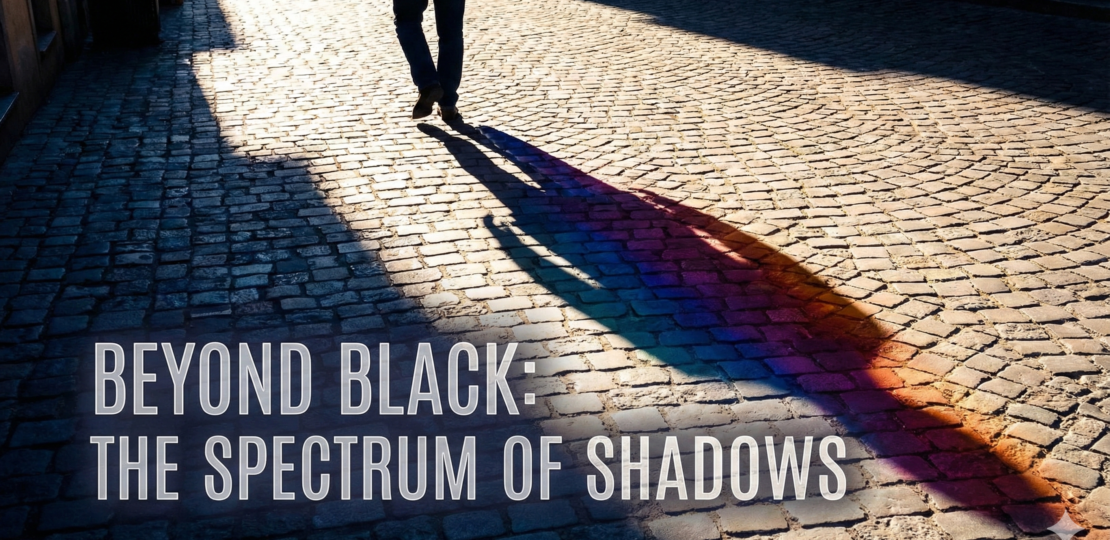
The heart of the trick lies in light not coming from a single, perfect spotlight above our heads. Sunlight scatters. Streetlamps spill sideways. Walls reflect. When you’re blocking a light source, you’re rarely blocking all of it. The result is a layered shadow. The darkest part—the umbra—is where light is fully blocked. The lighter halo—the penumbra—forms because light from the edges of the source still reaches the ground. This is why your shadow at noon is crisp like a signature, but your shadow at sunset is fuzzy, elongated, and almost artistic, as though the sun is doodling with you.
Reflections add another twist. Every surface around you—concrete, glass, trees, even dust—throws back bits of light in different colors. These reflections spill into your shadow. That’s why your shadow can look blue on a bright day: the sky scatters blue light everywhere, and some of that sneaks into the dark patch you think you’re “creating.” You’re not painting darkness on the world; you’re just interrupting a complex dance of photons.
Even your eyes get in on the game. Human vision adjusts brightness dynamically, amplifying light in darker areas to maintain contrast. That’s why, under certain lighting, a shadow can appear almost glowing or tinted. The brain cheats—brilliantly—and paints in whatever it thinks should be there.
If you want an example of someone who went beyond noticing this oddity and actually explained it, you can tip your hat to Johannes Kepler. Long before he was famous for planetary orbits, he studied how light casts shadows, giving us the language of umbra and penumbra. It wasn’t glamorous work, but it quietly established the foundations for everything from solar eclipse prediction to modern lighting design.
Every shadow is a tiny reminder that the world is never as binary as it seems. Darkness isn’t an absence—it’s an overlap of light, environment, physics, and perception. Once you notice that, even your own shadow becomes a small scientific adventure waiting at your feet.
RELATED POSTS
View all