The Monastic Philosophy of Deep Work: Designing a Life for Focus
January 5, 2026 | by Venkat Balaji
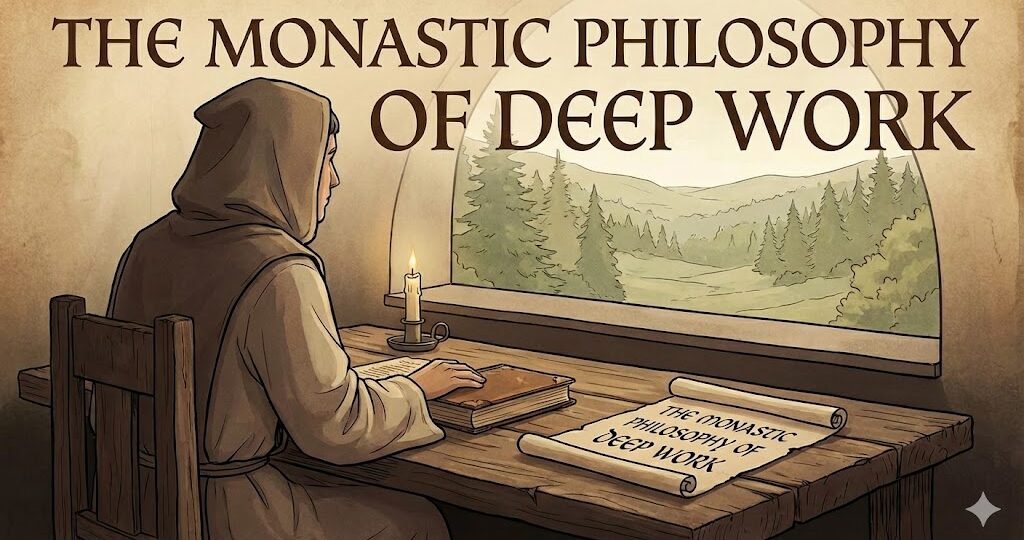
Welcome back. If you have not read yesterday’s post on what Deep Work is, this might be tough to follow. I’m discussing the first of the 4 methods of deep work: the Monastic Philosophy.
The Monastic Philosophy of Deep Work utilises eliminating shallow work to achieve maximum deep work opportunities. You must outsource, reject, or minimize shallow work so that deep work becomes your default, not a secondary mode.
That’s why it is called monastic. Similar to monks, the deep work must be separated from the noise of the world. Limited email. Limited social presence. Limited availability. It’s not literal detachment, but prolonged isolation from distractions.
The best examples of these are authors and professors. When people in these particular professions engage in monastic deep work, this is what it looks like. When writing a book, an author may vanish to all but their immediate family. A professor might dedicate an entire semester to teaching, and the next entirely to research. During the research semester, they will be cut off from email (including student emails), avoid scheduling meetings, and might not even partake in cultural activities.
The advantages of this philosophy are profound. Eliminating context switching—moving from classes to research to meetings—lets your mind fixate on a single thing, exactly what deep work demands. It also reduces decision fatigue: instead of juggling many choices, you focus on a single project. Furthermore, focusing on a single project allows your brain to generate original ideas even offline, boosting creativity.
However, there are downsides to this. When you pay close attention to the examples given, you see a pattern. These careers allow high autonomy, unlike most engineering or IT roles. For an author or professor, it is their individual (mostly) intellectual contributions that make them successful. For a developer at an IT firm, they contribute to a project over which they cannot assert control. Some meetings are mandatory. Availability by email is necessary. As a developer, you can’t dedicate one season to deep work and another entirely to meetings and emails.
If your career allows autonomy, like an author or professor, try applying this philosophy. If not, do not worry, as we have 3 more philosophies coming up.
RELATED POSTS
View all