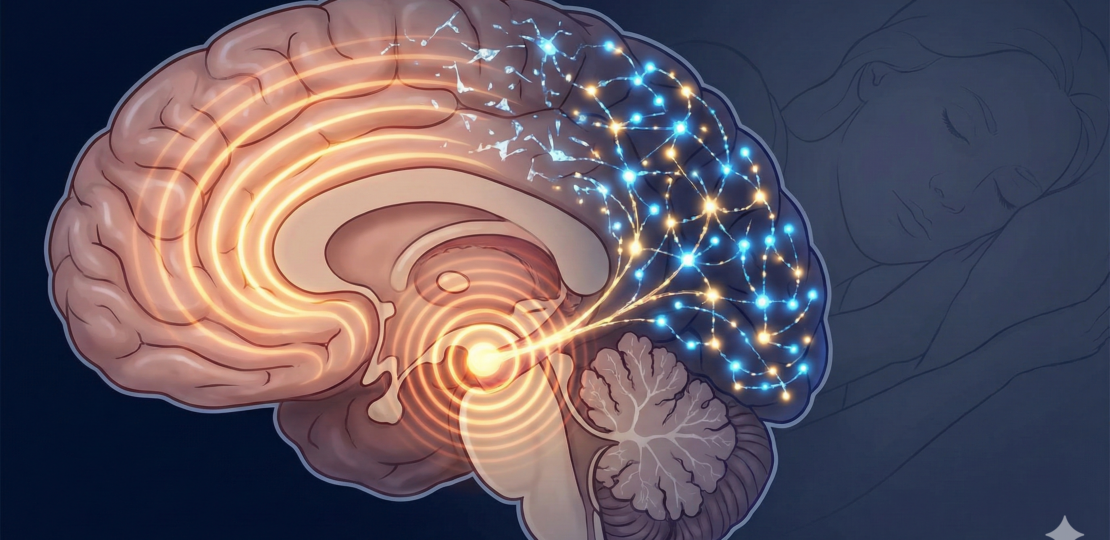
Imagine your brain as a bustling city at night. The streets are quiet, the lights dim, but deep in the alleys and side streets, secret parties are happening. In the brain, one of these mysterious night-time events is called a sharp wave ripple—a burst of neural activity that looks tiny on the EEG but plays a massive role in memory and learning.
Sharp wave ripples occur mainly in the hippocampus, a region critical for forming memories. During sleep, especially in the deep slow-wave stages, neurons fire in coordinated bursts, creating these ripples that last just a fraction of a second. It’s like the brain is rehearsing scenes from your day, replaying experiences at lightning speed. Neuroscientists have shown that disrupting these ripples in animals can prevent memories from consolidating, almost as if the brain forgot to save the files from the day.
What’s fascinating is that these ripples are not random noise. They replay sequences of neural firing that represent real-life experiences—running a maze, meeting a friend, or even learning a new skill. Some researchers have likened it to a nightly “highlight reel” your brain puts together to reinforce learning. In humans, evidence suggests these ripples may even underlie problem-solving and creativity, stitching together pieces of knowledge in novel ways while you sleep.
But here’s the quirky twist: sharp wave ripples are a type of synchronous chaos. Thousands of neurons fire together, creating patterns that look almost like a perfectly timed fireworks show—but one that lasts only milliseconds. The brain thrives on this kind of precise disorder, where tiny bursts of chaos strengthen order in our memories and mental maps. It’s a beautiful paradox: our minds rely on brief, fleeting moments of chaos to maintain stability in the long run.
RELATED POSTS
View all