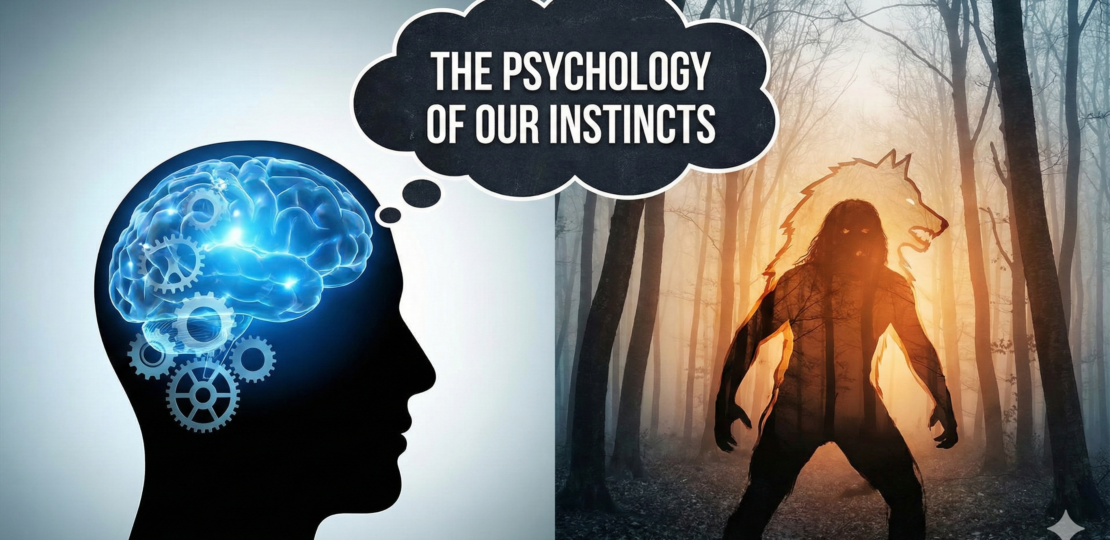
Humans like to think we are creatures of reason, carefully weighing every choice before acting. Yet beneath the surface of conscious thought lies a powerful network of instincts—automatic, fast, and often mysterious impulses that guide behavior long before our rational mind steps in. These instincts aren’t just primitive leftovers; they are sophisticated psychological tools that have evolved to help us survive, connect, and navigate complex social worlds.
Take, for instance, the “fight or flight” response. Long before you consciously decide whether to run from a threat, your body has already flooded with adrenaline, your heart is racing, and your muscles are primed for action. Psychologists describe this as an evolutionary instinct: a built-in mechanism designed to maximize survival in moments of danger. But instincts extend beyond life-or-death scenarios. Subtle cues in body language, tone of voice, or facial expression often trigger instantaneous judgments about trust, attraction, or social hierarchy—all processed beneath conscious awareness.
Interestingly, instincts are not rigid; they can be shaped and refined. Through repeated experiences, humans learn which impulses to amplify and which to suppress. For example, a parent may instinctively respond to a baby’s cry, but over time, they develop nuanced ways of interpreting different cries—distinguishing between hunger, discomfort, or the need for attention. Similarly, in social interactions, people often rely on gut feelings shaped by past experiences to navigate complex relationships and make split-second decisions.
Yet instincts can also mislead. Our evolutionary wiring is tuned to environments very different from modern life. Snap judgments about strangers, risk-taking impulses, or fears of scarcity may once have protected us but can now generate anxiety, prejudice, or impulsive mistakes. Understanding the psychology of instinct helps us recognize when to trust our gut—and when to question it. It’s a delicate dance between the automatic and the deliberative, revealing the intricate architecture of the human mind.
Ultimately, instincts remind us that much of what we do is not consciously plotted but emerges from a deep reservoir of evolutionary wisdom. From subtle social intuition to immediate survival responses, our instincts silently shape decisions, emotions, and relationships. In acknowledging and exploring them, we uncover not only the mechanics of human behavior but the extraordinary intelligence hidden within our automatic responses.
RELATED POSTS
View all