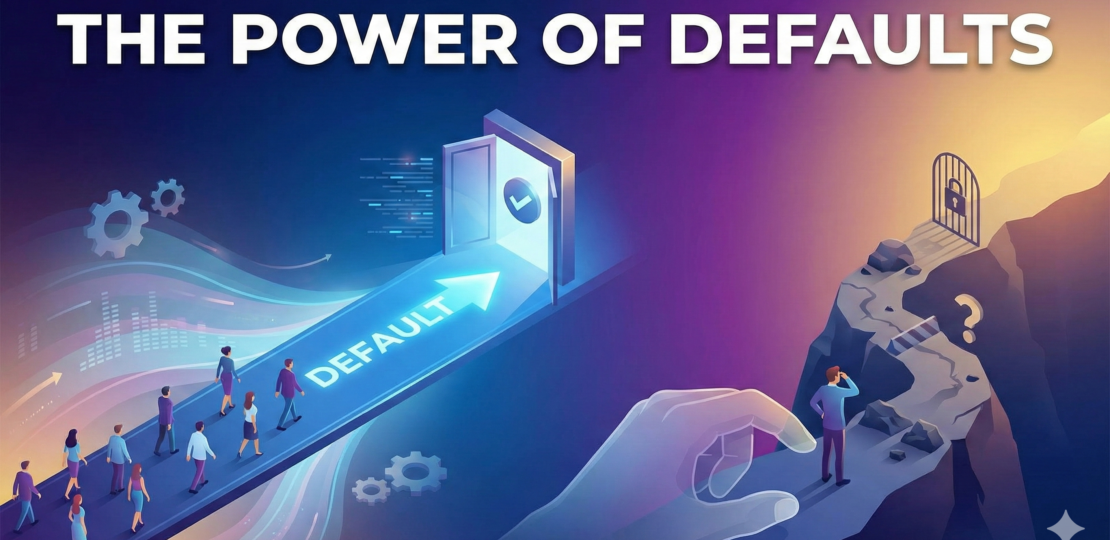
Most of the big decisions in our lives don’t feel big when we make them. That’s the strange part. We imagine ourselves as deliberate thinkers, weighing options like a careful judge. In reality, we often go with whatever option is already selected for us. Behavioral economists call this the default effect, and it quietly shapes everything from retirement savings to privacy settings to whether we donate organs.
Here’s the basic idea. When one option is presented as the “normal” choice, many people stick with it, even when switching would be easy and beneficial. Not because they agree with it deeply, but because changing it requires effort, attention, and a small psychological push. Humans are excellent energy savers. If the system says, “This is already done,” the brain often replies, “Good enough.”
This effect shows up dramatically in organ donation policies. Countries where people are automatically enrolled as donors—unless they opt out—have far higher donation rates than countries where people must opt in. The population didn’t suddenly become more altruistic. The paperwork just changed direction. The moral lesson here is uncomfortable but useful: our values often follow our circumstances, not the other way around.
Defaults matter because they reveal something humbling about human rationality. We don’t always choose what’s best; we choose what’s easiest. That doesn’t mean we’re foolish. It means our minds evolved to operate under limited time, limited information, and limited energy. Behavioral economics doesn’t scold this tendency—it studies it, maps it, and sometimes uses it to nudge people toward better outcomes.
Once you notice defaults, you can’t unsee them. The pre-checked box, the recommended plan, the “standard option” all carry quiet authority. Understanding that power doesn’t make you immune to it, but it does give you a rare advantage: the ability to pause and ask whether the path you’re on was truly chosen—or merely accepted.
RELATED POSTS
View all