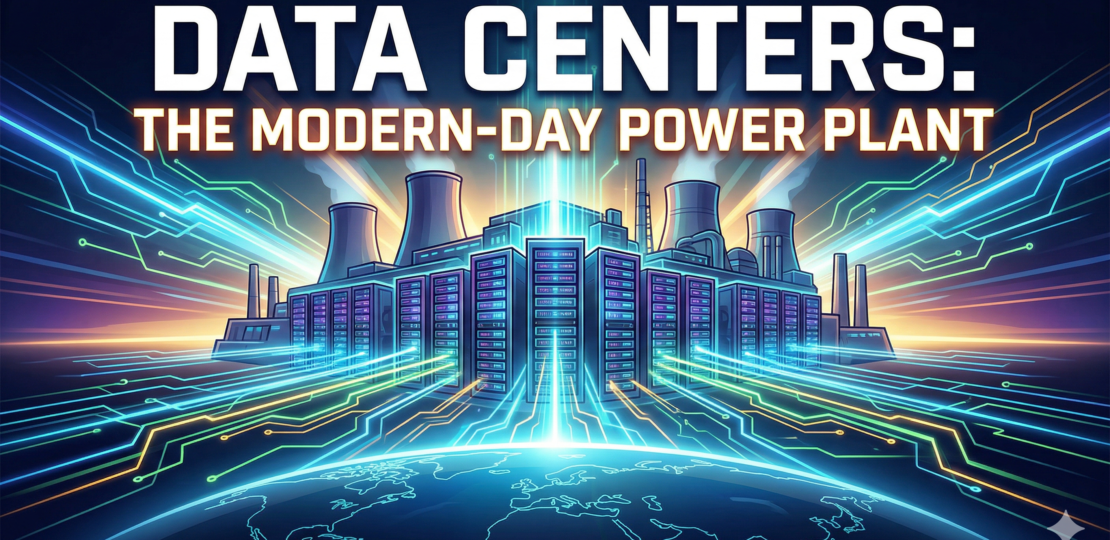
When people talk about the AI boom, they usually imagine smarter chatbots or self-driving cars. What they don’t picture is something far less glamorous but far more important: massive warehouses filled with servers, quietly consuming enormous amounts of electricity. Companies like Google, Microsoft, and Amazon are now building data centers at a pace that’s starting to reshape entire energy systems.
A single modern data center can consume as much electricity as a small city. Training large AI models—like the ones powering tools such as ChatGPT—requires thousands of GPUs running continuously for weeks. And once trained, these systems still need constant energy to serve millions of users. The result is a steady, growing demand for power that doesn’t fluctuate much—it’s always “on.”
This is where things get interesting. Traditionally, power grids were designed around human behavior: peaks in the morning, dips at night. But data centers don’t follow human rhythms. They prefer constant, reliable energy. That’s pushing utilities to rethink how electricity is generated and distributed. In some regions, companies are even negotiating directly with energy providers to build dedicated power infrastructure—something that used to be reserved for heavy industries like steel or aluminum.
It’s also quietly influencing the clean energy transition. On one hand, tech companies are among the biggest investors in renewable energy, signing large contracts for solar and wind farms. On the other hand, the sheer scale of demand is so high that some areas are reconsidering nuclear power or even delaying the shutdown of fossil fuel plants. The AI revolution, in a strange twist, is both accelerating and complicating the shift to greener energy.
Zoom out, and you start to see a deeper pattern. Information—something that feels weightless and abstract—is now tightly coupled with physical resources: land, water (for cooling), and above all, energy. The “cloud” was never really a cloud. It’s infrastructure, heavy and real, quietly becoming as essential as roads or railways. And in the coming years, the question won’t just be who has the best algorithms—but who can afford to power them.
RELATED POSTS
View all