Every search, video stream, and AI conversation relies on a hidden network of data centers scattered across the world. These facilities consume enormous amounts of electricity, but one of their greatest challenges is surprisingly mundane: keeping thousands of computers cool. Today, cooling systems account for a significant portion of a data center’s operating costs. Some engineers believe the solution isn’t a better air conditioner—it’s the ocean itself.
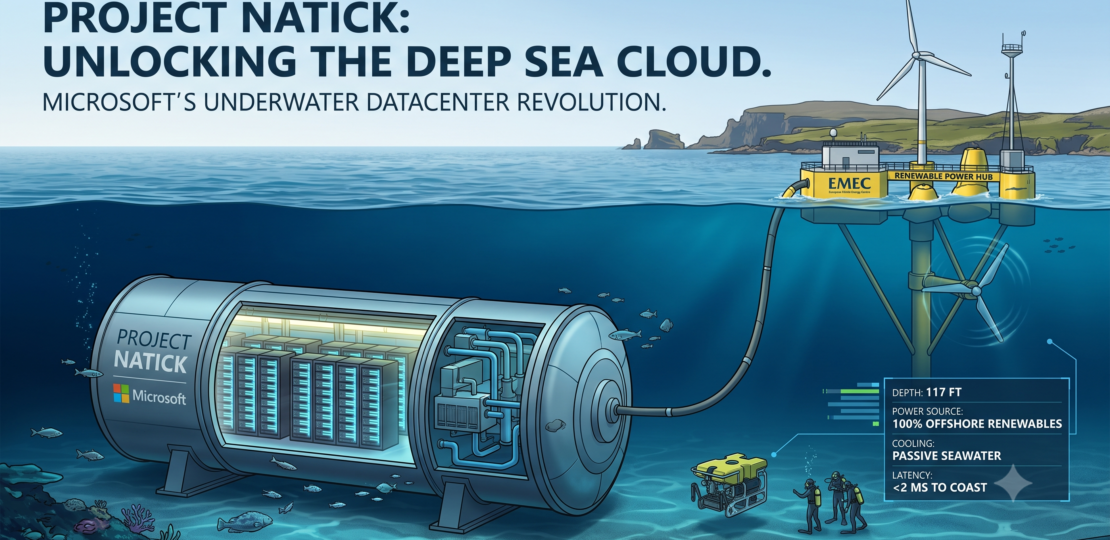
The concept of underwater data centers gained global attention when Microsoft launched Project Natick, an experiment that placed a sealed server capsule on the seabed off the coast of Scotland. Surrounded by naturally cold seawater, the servers required far less energy for cooling than their land-based counterparts. After nearly two years underwater, the results were unexpectedly encouraging. The underwater servers experienced fewer hardware failures, partly because they operated in a stable environment protected from dust, humidity, and human interference.
Building permanent underwater computing facilities, however, presents an entirely new set of engineering challenges. Pressure-resistant enclosures must survive decades beneath the surface while resisting corrosion from saltwater. Fiber-optic cables must carry enormous volumes of data to and from shore, and robotic maintenance systems may eventually replace human technicians for inspections and repairs. Engineers are also exploring whether these facilities could be powered directly by nearby offshore wind farms or tidal energy systems, creating self-sufficient computing hubs beneath the waves.
While underwater data centers are still experimental, they illustrate a broader shift in engineering. Rather than forcing nature to accommodate our technology, engineers are increasingly designing technology that works with natural environments. If this trend continues, the backbone of tomorrow’s internet may not be housed in towering buildings across major cities, but quietly operating on the ocean floor, cooled by the sea itself.
RELATED POSTS
View all