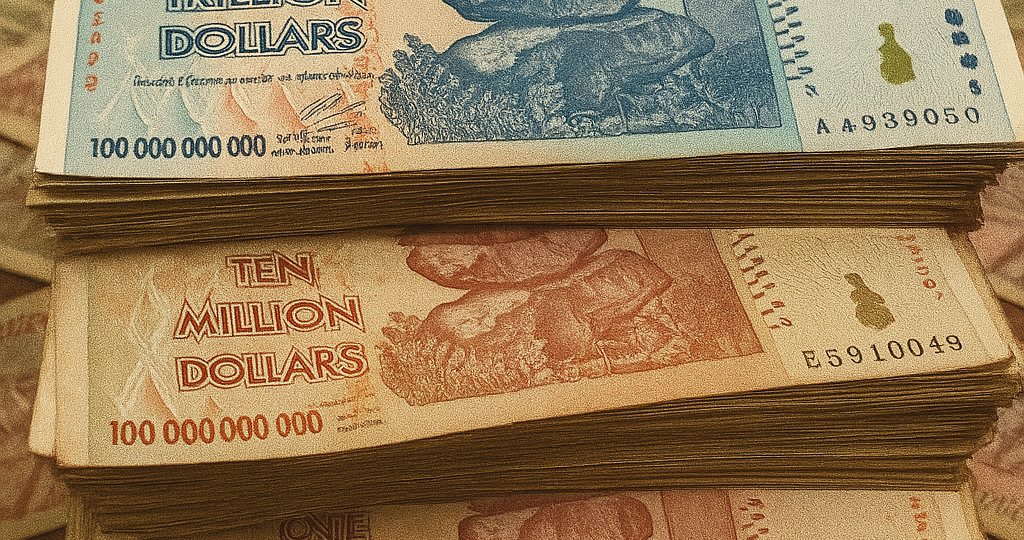
Imagine walking into a store with a bag full of money and walking out with just a single loaf of bread — if you’re lucky. This was the daily reality in Zimbabwe in the late 2000s, during one of the worst cases of hyperinflation the world has ever seen. At its peak in November 2008, Zimbabwe’s inflation rate hit an astronomical 79.6 billion percent per month. Prices doubled almost every day, and the government was printing trillion-dollar bills — which quickly became useless.
So how did this happen? It began with a mix of economic mismanagement, political instability, and reckless money printing. In the early 2000s, the Zimbabwean government, under President Robert Mugabe, seized white-owned commercial farms and redistributed them. While the goal was land reform, the sudden loss of agricultural expertise and productivity collapsed Zimbabwe’s biggest industry. With less food and fewer exports, the economy shrank rapidly. To keep things afloat, the central bank printed more money — but without real value behind it, this only devalued the currency further.
People lost all faith in Zimbabwean money. Banks stopped functioning normally. Shops refused to accept the local currency and turned to barter or foreign currencies like the U.S. dollar and South African rand. A notorious example? The government issued a 100 trillion Zimbabwean dollar note in 2009 — a note now worth more as a collector’s item than it ever was as legal tender. Eventually, in 2009, Zimbabwe abandoned its own currency entirely, opting for a multi-currency system just to survive.
Zimbabwe’s hyperinflation is a powerful reminder that money isn’t just paper — it’s trust. Once that trust is broken, entire economies can collapse, and even basic necessities become luxuries. Today, the country has slowly stabilized, but scars remain. The story stands as one of the clearest modern examples of how inflation, if unchecked, can unravel a nation.
RELATED POSTS
View all