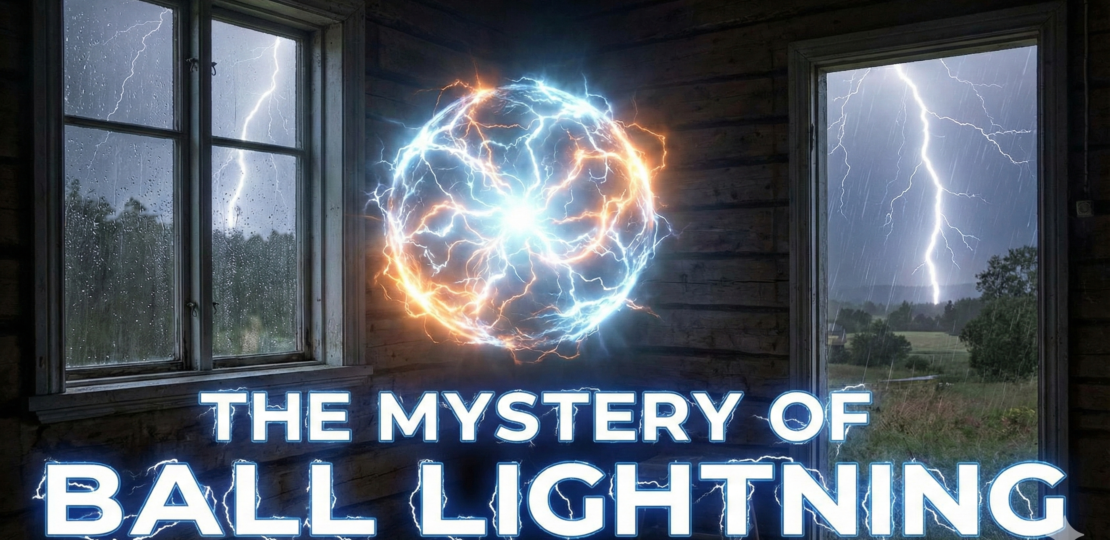
Some natural phenomena feel like they were invented by mischievous storytellers rather than observed by scientists. Ball lightning is one of them—a glowing, floating sphere of light that appears during thunderstorms, drifts around like a curious pet, and then vanishes with a pop. It sounds like folklore, but credible reports stretch across centuries.
People have described these orbs as anywhere from the size of a grape to a basketball, glowing white, blue, or orange, sliding silently through the air. A few accounts even claim they wandered into homes through open windows before disappearing. For decades, physicists avoided the topic because it felt too fringe, like studying ghost sightings. But in the last century, researchers got bolder.
One key figure was Petr Kapitza, a Soviet physicist who suggested in the 1950s that ball lightning might form from plasma—electrified gas—sustained by microwave radiation trapped in a bubble. Later researchers, including Brazilian physicist Antonio Pavão, tried recreating miniature versions in labs using burning silicon, producing brief floating lights that behaved suspiciously like the mysterious spheres. The phenomenon isn’t fully understood, which only adds to its charm.
Science is usually tidy, structured, predictable. Ball lightning reminds us that nature sometimes refuses to explain itself on schedule. A little mystery keeps the universe interesting—and keeps physicists humble.
RELATED POSTS
View all