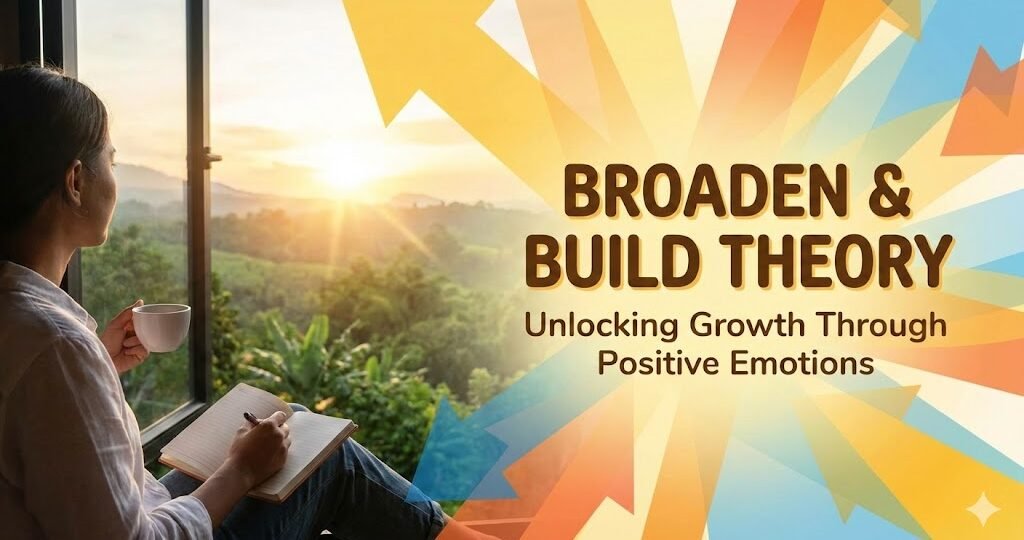
Feeling Good is much more than a mood enhancement: The Broaden-and-Build Theory
January 9, 2026 | by Venkat Balaji
For a long time, psychology treated positive emotions as pleasant but shallow—nice to have, but not particularly useful. Barbara Fredrickson’s Broaden-and-Build Theory quietly overturned that idea. Her argument is simple yet radical: positive emotions don’t just make life enjoyable, they help us grow. Joy, curiosity, gratitude, and love are not emotional decorations. They are tools shaped by evolution to make us more capable over time.
The first part of the theory is broaden. Positive emotions expand the way we think and perceive the world. When we feel joy or interest, our minds become more flexible. We notice more possibilities, think more creatively, and explore rather than retreat. This is the opposite of what negative emotions do. Fear narrows attention to escape, anger to confrontation. That narrowing is useful in emergencies, but it limits growth. Positive emotions loosen that tunnel vision and invite play, learning, and connection.
The second part is build, and this is where the theory gains depth. Those brief moments of broadened thinking accumulate into lasting resources. Curiosity builds knowledge and skills. Play builds physical and social abilities. Gratitude strengthens relationships. Over time, these resources remain even after the emotion fades. Feeling good today can quietly make you more resilient tomorrow. Happiness, in this view, is not a fleeting high—it’s an investment.
Fredrickson also describes emotional upward spirals. Positive emotions make it easier to cope with challenges, which in turn increases the likelihood of experiencing more positive emotions. The opposite can happen too: chronic stress and negativity can shrink perspective and drain resources. Importantly, the theory doesn’t argue for eliminating negative emotions. Fear, anger, and sadness have their place. The claim is subtler: without enough positivity, growth stalls.
The practical implication is both comforting and demanding. You don’t need grand transformations to improve your life. Small, ordinary moments matter—shared laughter, genuine interest, quiet appreciation. These moments seem insignificant in isolation, but they compound. Over time, they shape how you think, who you connect with, and how well you handle adversity. Feeling good isn’t a reward you earn after life goes well. According to the Broaden-and-Build Theory, it’s one of the reasons life goes well at all.
RELATED POSTS
View all