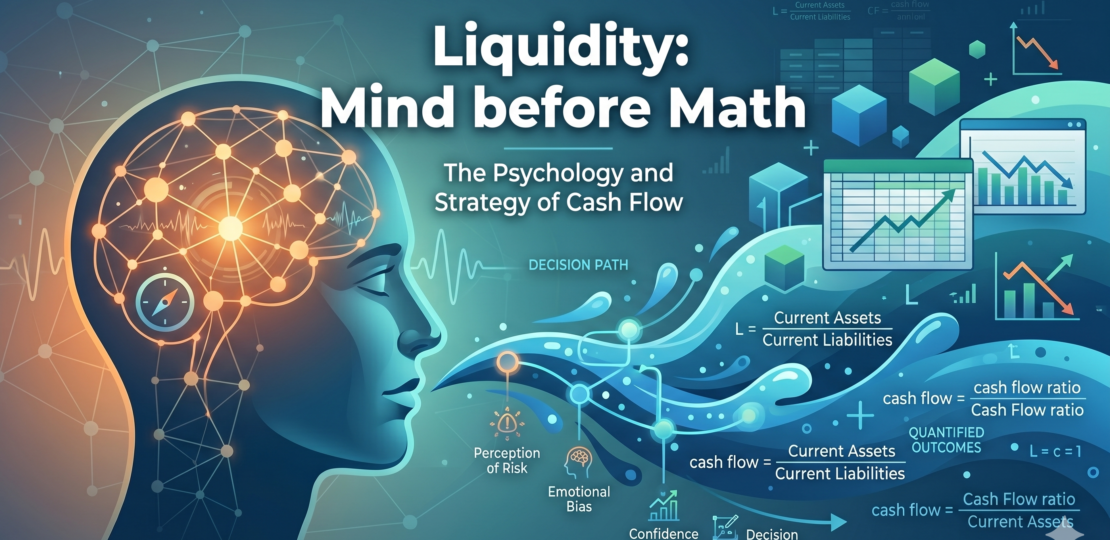
Most people think of money in terms of quantity. How much is in the bank account, how much salary comes in every month, how much remains after expenses. Financial economics, however, often focuses on something more subtle: liquidity. Not how much wealth exists, but how easily it can move.
A person may technically own significant assets and still feel financially trapped. A house, retirement fund, or long-term investment portfolio can create the appearance of wealth while offering very little immediate flexibility. Meanwhile, someone with far less total wealth but a stable stream of accessible cash may experience less stress and make calmer decisions. This difference matters because economic behavior is often driven less by absolute wealth and more by perceived maneuverability.
Researchers studying financial decision-making have repeatedly observed that illiquidity changes psychology. When people feel that money is “locked away,” they become more risk-sensitive in everyday life. Small expenses feel heavier. Unexpected events produce disproportionate anxiety. Even cognitive performance can decline under financial strain, not necessarily because of poverty itself, but because the mind begins allocating attention toward short-term survival calculations.
This creates an interesting paradox in modern economies. Many individuals are wealthier on paper than previous generations, yet simultaneously feel financially fragile. A large portion of their wealth may exist in forms that cannot easily absorb emergencies: housing equity, retirement accounts, stock options, or long-term investments. Economically, they possess assets. Psychologically, they experience scarcity.
Financial economics therefore treats liquidity almost like a stabilizer for human behavior. Liquid systems reduce panic because they preserve optionality. They allow people to delay irreversible decisions, adapt to shocks, and tolerate uncertainty without immediately collapsing into defensive thinking. In that sense, liquidity is not merely a market concept. It is deeply tied to how secure people feel navigating everyday life.
RELATED POSTS
View all