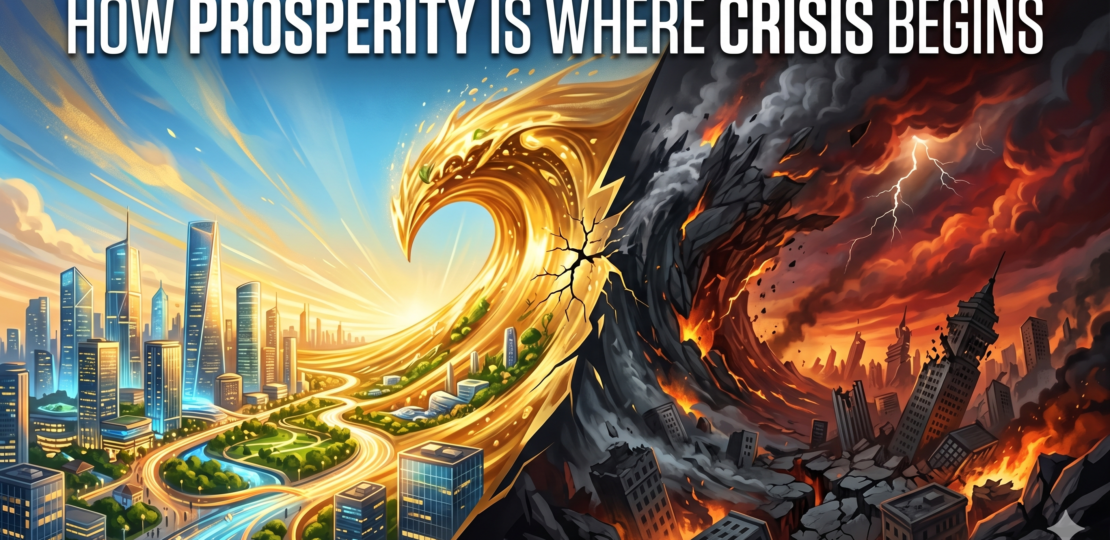
History rarely repeats in obvious ways, but it often rhymes in structure. One of the most persistent patterns across centuries is the cycle where periods of economic prosperity gradually evolve into instability. It begins innocently—growth accelerates, confidence rises, and risk feels manageable. But beneath that optimism lies a subtle shift: success starts to justify excess. This is not tied to a specific country or era; it’s a recurring phenomenon embedded in how human beings respond to abundance.
In the early stages of growth, investments are grounded in real productivity—industry expands, innovation drives value, and capital flows toward meaningful output. Over time, however, the nature of investment changes. Speculation begins to outpace substance. People no longer invest because something is valuable; they invest because they believe someone else will value it more tomorrow. This psychological transition—from value-based decisions to expectation-based behavior—is where the cycle quietly turns. Economic systems don’t collapse suddenly; they drift into fragility.
What makes this pattern enduring is its deeply human core. Confidence is contagious, but so is complacency. As more participants enter the system, often with less understanding and more optimism, leverage increases. Debt becomes easier to justify, risks are reframed as opportunities, and safeguards are seen as unnecessary friction. At this point, the system looks strongest from the outside—markets are high, participation is broad, and narratives of “a new era” begin to dominate. Ironically, this is when the system is most vulnerable.
The correction, when it comes, feels abrupt but is rarely surprising in hindsight. A trigger—sometimes minor—exposes the underlying fragility. What was built on expectation struggles to withstand reality. Prices adjust, confidence reverses, and the same forces that drove expansion now accelerate contraction. Yet, after each cycle, the same pattern re-emerges, often with new instruments, new terminology, and renewed belief that “this time is different.”
This recurring phenomenon suggests something deeper than flawed policy or isolated mistakes. It reflects a tension at the heart of economic life: the balance between rational systems and irrational behavior. Progress creates possibility, but also overreach. Stability encourages growth, but also risk-taking. And so, history moves—not in straight lines, but in cycles shaped as much by human psychology as by economic fundamentals.
RELATED POSTS
View all