Evolution is often described as a process in which useful genes survive while harmful ones disappear. But genomes are rarely so orderly. Some genetic sequences survive for millions of years even after their original purpose has disappeared. Others appear to be useless until circumstances suddenly make them valuable.
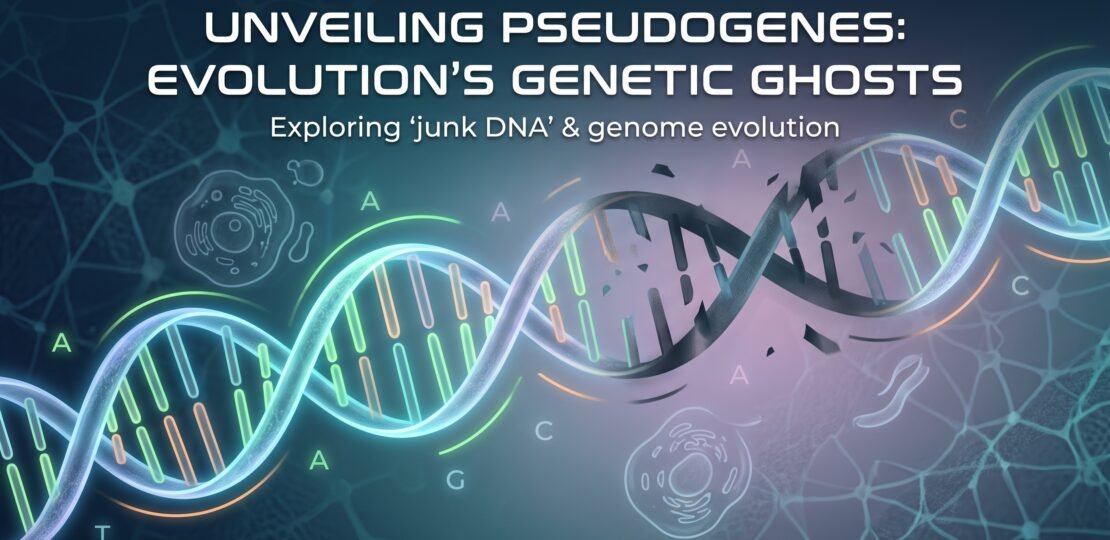
One of the most fascinating examples is found in pseudogenes—DNA sequences that resemble functional genes but have accumulated mutations that prevent them from producing their original proteins. For a long time, pseudogenes were dismissed as little more than genetic fossils: remnants of evolutionary history with no meaningful role in the present.
That view has changed.
Some pseudogenes can still influence the activity of functioning genes. Their RNA molecules can interact with regulatory machinery, alter gene expression, or compete with other molecules inside the cell. In other words, a piece of DNA that appears broken according to its original purpose can acquire an entirely different function.
The evolutionary history of the human genome contains countless such remnants. Some genes have been duplicated, modified, partially disabled, and preserved across generations. Others have accumulated mutations so extensively that their original function can only be reconstructed by comparing them with related species.
This makes the genome resemble an archaeological site. It contains not only the instructions currently being used, but also fossils of previous biological experiments—failed adaptations, duplicated genes, ancient viral sequences, and genetic fragments whose original purposes have been lost to time.
The important realization is that evolution does not design organisms from scratch. It modifies what already exists. A useful gene may be duplicated rather than newly invented. An old sequence may be repurposed rather than discarded. A mutation that once seemed insignificant may become valuable when the environment changes.
The genome is therefore not a perfectly engineered blueprint. It is a historical record—messy, redundant, occasionally broken, and filled with remnants of things that once mattered.
And that mess may be precisely what makes evolution so powerful.
RELATED POSTS
View all