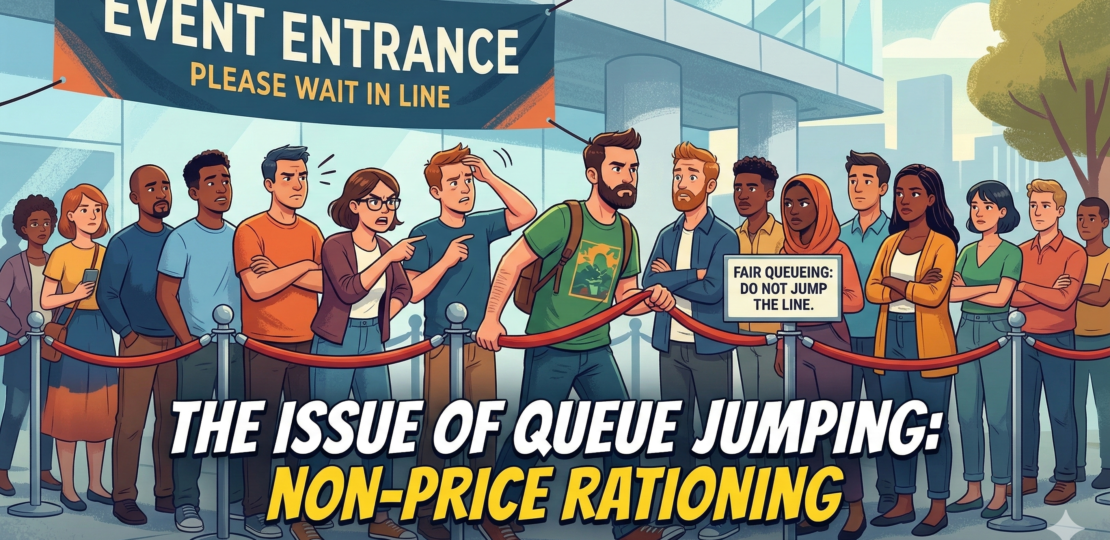
Lines look like a simple social arrangement: first come, first served. But economists see something deeper hiding inside them. A queue is actually a pricing system disguised as waiting time. Instead of paying money, people pay with their time.
This creates an interesting problem. Not everyone values time equally. A busy professional might value an hour very highly, while someone else might not mind waiting. If a service is free but scarce—concert tickets, government offices, popular restaurants—the queue becomes the mechanism that allocates access. The real “price” of the service becomes the amount of time you must sacrifice.
Economists call this phenomenon Non-Price Rationing. Instead of raising prices to reduce demand, the system allows waiting time to perform the rationing. In theory this feels fair because everyone faces the same rule: join the line and wait your turn.
But markets often find ways to turn time back into money. This is where things get interesting. Theme parks sell “fast passes.” Airports offer priority security lanes. Some restaurants allow paid reservations that bypass walk-in queues. What used to be a time-based allocation system quietly becomes a price-based one again.
This transformation reveals a hidden economic tension. Queues appear fair because they treat everyone equally in terms of time. Yet they can be inefficient because they waste hours of human life. Economists sometimes argue that charging money instead of forcing people to wait can actually increase efficiency, even if it feels less fair.
The strange part is that queues exist precisely because charging higher prices can feel socially unacceptable. Imagine a hospital charging triple the price during busy hours or a government office charging $50 to avoid waiting. People often react strongly to such pricing, even if it saves time overall. So societies tolerate long lines rather than openly pricing access.
What looks like an ordinary line is actually a quiet economic compromise between fairness and efficiency. Every queue hides a small philosophical debate: should scarce things be allocated by money, or by patience? In practice, modern economies constantly oscillate between the two.
RELATED POSTS
View all