When a bridge or building begins to crack, the solution is usually straightforward: inspect it, repair it, or replace it. Nature, however, follows a different philosophy. Break a bone, and the body repairs itself. Damage a tree, and new tissue grows around the wound. Increasingly, civil engineers are wondering whether our infrastructure could one day behave the same way.
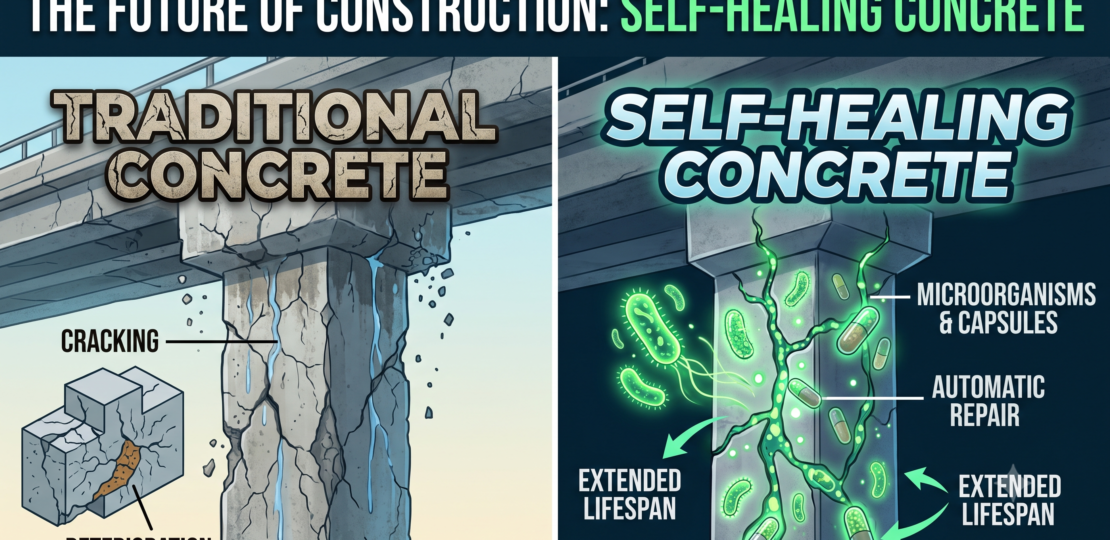
One of the most promising ideas is self-healing concrete. Traditional concrete inevitably develops tiny cracks over time. Water seeps in, steel reinforcement corrodes, and repairs become expensive long before the structure reaches the end of its intended life. To address this, researchers have developed concrete containing dormant bacteria or microscopic capsules filled with healing agents. When a crack forms and water enters, the bacteria awaken and produce limestone, naturally sealing the gap before it can grow into a serious structural problem. Other approaches use polymers or mineral-based compounds that flow into cracks and harden automatically.
The implications extend far beyond reducing maintenance costs. Bridges could continuously repair minor damage caused by traffic, tunnels could seal small leaks without human intervention, and underground infrastructure could remain operational for decades longer than today’s designs. Engineers are also investigating materials that can sense internal stress, report damage wirelessly, and even adapt their properties in response to changing environmental conditions. Instead of treating buildings as static objects, future infrastructure may function more like living systems that monitor and preserve themselves.
Although self-healing materials are still in the early stages of adoption, they represent a profound shift in engineering. For centuries, the goal has been to build structures strong enough to resist failure. Tomorrow’s engineers may pursue a different objective altogether: creating structures that expect to fail in small ways—and quietly heal themselves before anyone notices.
RELATED POSTS
View all