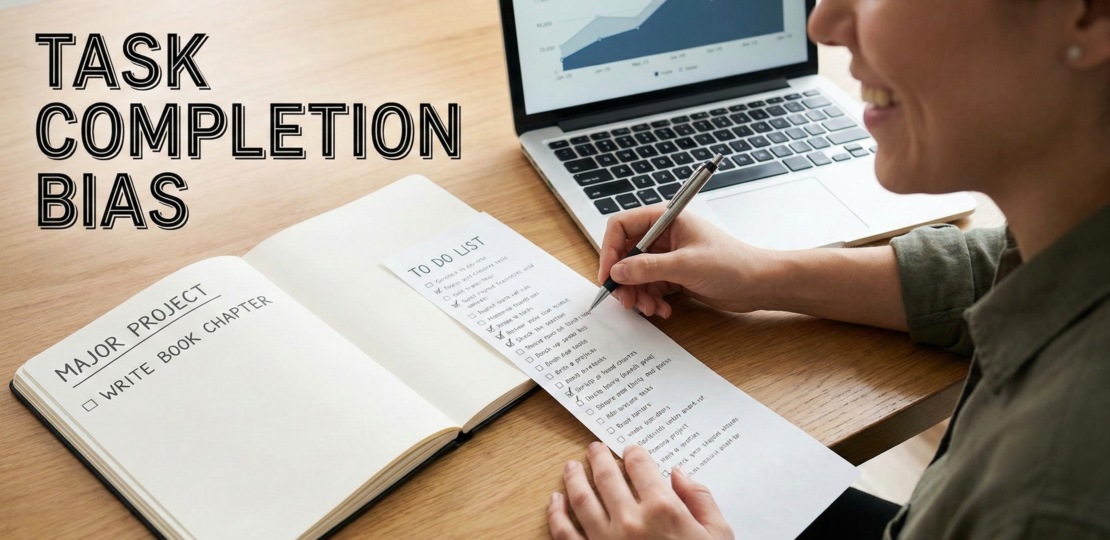
Productivity advice often praises busyness as a virtue. Full calendars, constant motion, the reassuring exhaustion at the end of the day. Behavioral psychology sees something more ambiguous. Being busy feels productive because it provides immediate feedback: movement, urgency, completion. But that feeling can quietly replace actual progress, like mistaking noise for signal.
The brain is wired to prefer tasks with quick rewards. Answering messages, organizing notes, tweaking systems—all offer small hits of closure. Psychologists call this task completion bias: we gravitate toward work that lets us check a box, even if it contributes little to our long-term goals. Deep work, by contrast, is slow, uncertain, and psychologically expensive. So the mind postpones it while staying “usefully occupied.”
There’s also an identity layer. Busyness functions as social proof. Saying “I’ve been so busy” signals importance and effort, even when outcomes are unclear. Over time, this can create a behavioral loop where being busy becomes the goal, and effectiveness becomes secondary. The calendar fills, the inbox empties, and the meaningful work waits patiently in the background.
The real productivity shift is learning to separate motion from direction. Behavioral psychology doesn’t argue for doing less; it argues for doing deliberately. Stillness, in this frame, isn’t laziness—it’s diagnostic. When the noise fades, priorities become visible. And once priorities are visible, effort finally has somewhere honest to go.
RELATED POSTS
View all

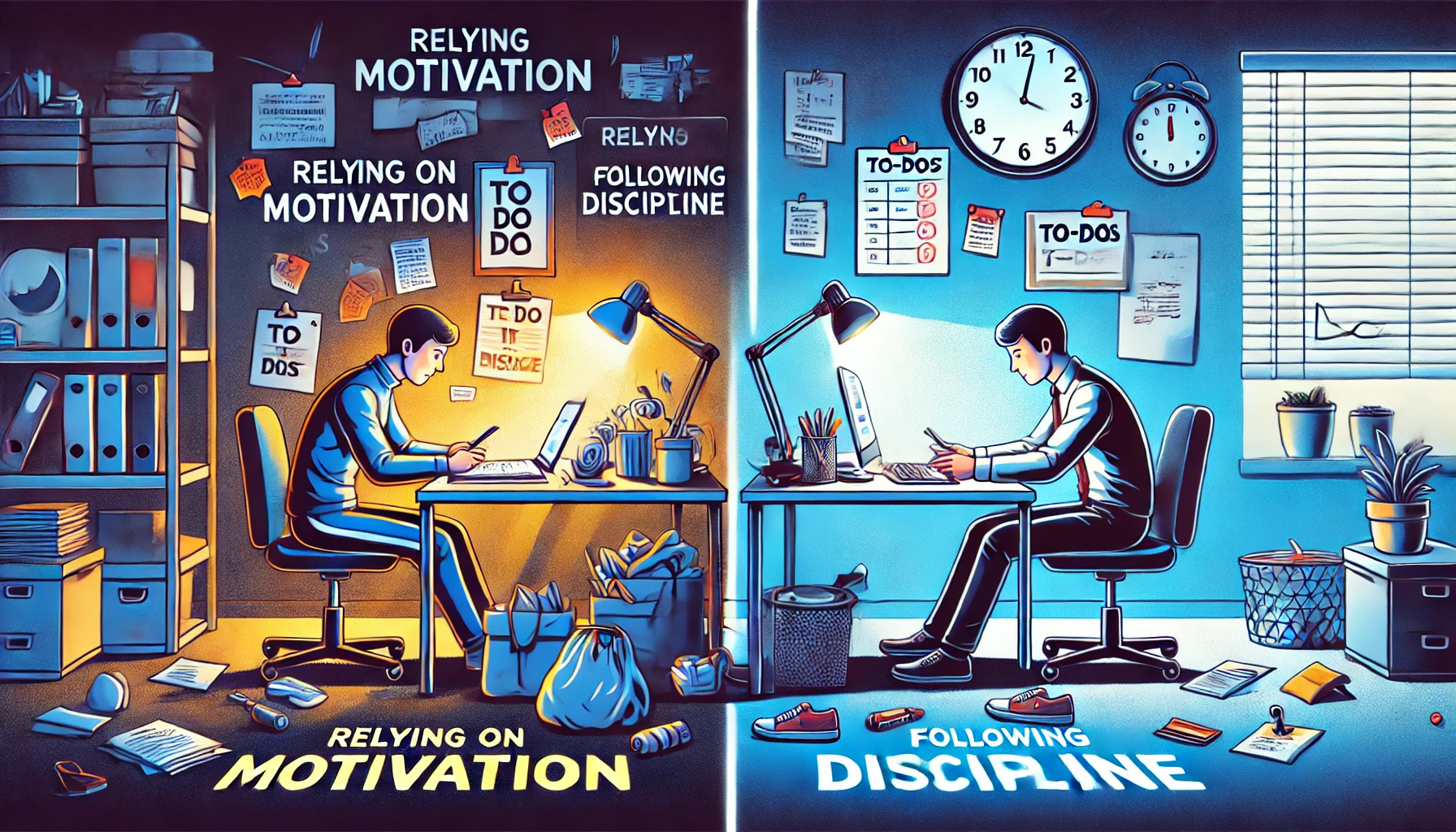
Motivation and Discipline: which way to go? (Productivity) (Cont.)
January 21, 2025 | by Venkat Balaji

Journalistic Philosophy of Deep Work: Deep Work on the Fly
January 8, 2026 | by Venkat Balaji