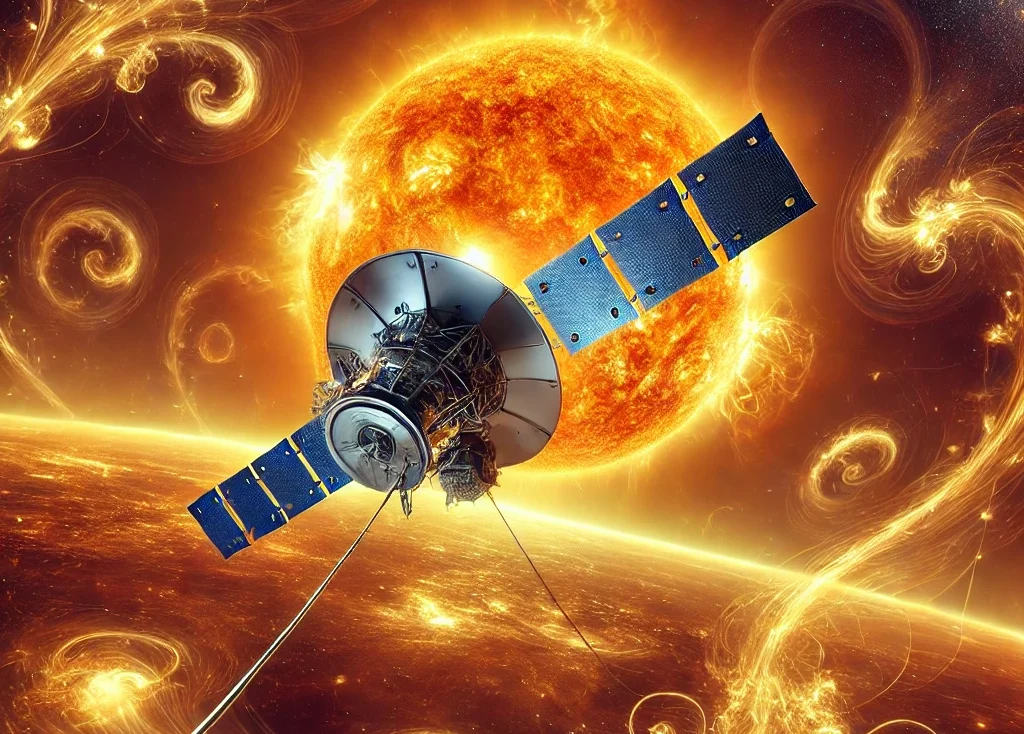
Two spacecraft approaching each other in orbit appear to have a simple task: move toward one another until they meet. In reality, orbital docking is one of the more delicate maneuvers in aerospace engineering. A spacecraft cannot simply fly toward another spacecraft and brake when it gets close. Both vehicles are moving around Earth at enormous speeds, and changing their velocity also changes their orbit.
The difficulty comes from the fact that being close does not mean moving in the same way. A spacecraft can be only a few hundred meters from another vehicle while still having a slightly different velocity or orbital trajectory. If it approaches too quickly, even a tiny mistake can produce a collision. If it approaches from the wrong direction, orbital mechanics can cause it to drift away rather than remain alongside its target.
Engineers therefore divide docking into carefully controlled phases. The approaching spacecraft first modifies its orbit so that it gradually reaches the same orbital path as the target. Navigation systems use measurements from radar, cameras, and other sensors to determine relative position and velocity. As the distance decreases, the allowed approach speed becomes extremely small. Near the final stage, the spacecraft may move only centimeters per second relative to its target.
The docking mechanism itself must also accommodate imperfect alignment. The two spacecraft cannot be expected to meet perfectly. Docking systems therefore contain guide surfaces, latches, springs, and other mechanisms that can absorb relative motion and pull the vehicles into a secure connection. Once the initial contact is made, additional structural connections can lock the spacecraft together and create a rigid interface.
What makes orbital docking fascinating is that the problem is not really about getting from one point to another. It is about controlling relative motion inside a moving gravitational system. Every maneuver changes the spacecraft’s orbit, and therefore changes where it will be in the future. Engineers are not simply steering through space; they are shaping trajectories through time.
A successful docking can therefore look almost uneventful: two spacecraft slowly touch, mechanisms engage, and the vehicles become one. But behind that quiet moment is an extraordinary combination of orbital mechanics, control theory, sensors, structural engineering, and precision navigation. In orbit, even something as ordinary as meeting another vehicle becomes a problem of carefully choreographing motion on a planetary scale.
RELATED POSTS
View all