In 1978, the United States deregulated the airline industry. Suddenly, prices weren’t tightly controlled by the government. Airlines could charge what they wanted. Chaos? Not quite. Something more interesting happened.
Look at a single flight from Chicago to New York. Two people sit side by side. One paid $89. The other paid $412. Same plane. Same peanuts. Same legroom that barely qualifies as legroom. How?
Welcome to price discrimination — but not the villainous kind you might imagine. This is a case study in extracting willingness to pay without explicitly asking, “How rich are you?”
Airlines discovered something subtle: business travelers care more about timing and flexibility than price. Vacation travelers care more about price than timing. So airlines created artificial constraints. Saturday-night stay requirements. Non-refundable tickets. Advance purchase discounts. These weren’t random policies. They were sorting mechanisms. A business traveler who needs to fly Monday morning and return Tuesday won’t stay over Saturday just to save $200. A tourist will.
The brilliance is quiet. Instead of charging different people different prices directly, airlines charge different behaviors different prices. Your schedule reveals your economic identity.
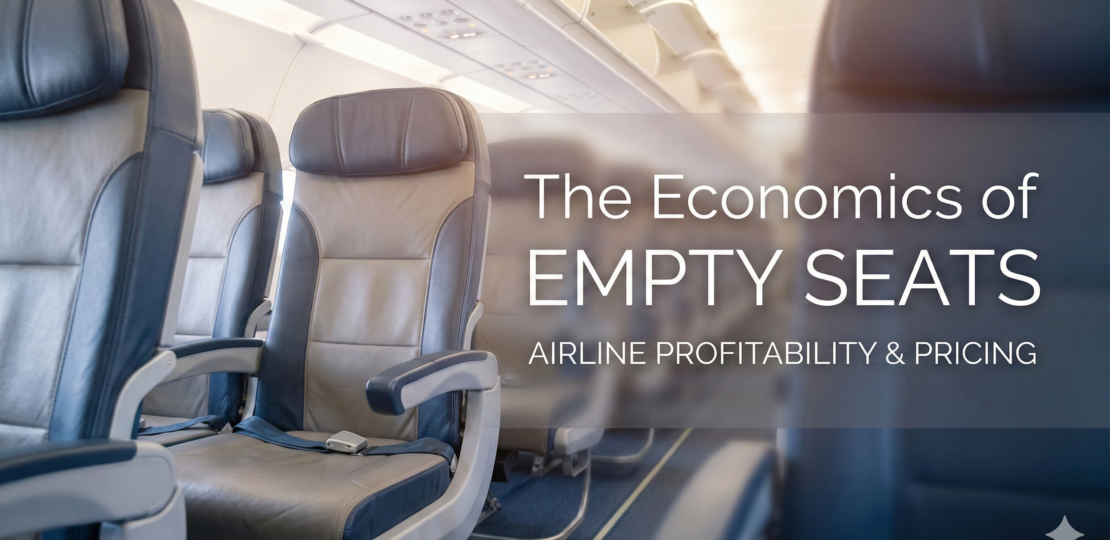
Now zoom out. The plane is a fascinating economic object. Once it takes off, an empty seat is permanently worthless. You can’t store it and sell it tomorrow. So airlines face a strange optimization puzzle: how do you sell as many seats as possible without lowering prices so much that high-paying customers disappear?
This is where yield management — a form of dynamic pricing — emerged. Airlines began using probability models to predict how many business travelers would book late. They intentionally leave some seats unsold at low prices early on, gambling that higher-paying passengers will appear closer to departure. It’s statistical theater with billions of dollars at stake.
This system later spread to hotels, ride-sharing apps, and even electricity markets. Whenever a product is perishable and capacity is fixed, this logic appears.
The part that’s rarely discussed is psychological. People feel cheated when they discover someone paid less. But economically, this pricing keeps routes viable. If every ticket were $89, many flights would disappear. The high-paying customers subsidize the low-paying ones. Inequality inside the cabin funds access outside it.
It’s a small, flying laboratory of market design. One metal tube in the sky, filled with strangers unknowingly participating in one of the most sophisticated pricing experiments ever created.
Economics often feels abstract — curves and graphs. But sometimes it’s just two passengers, same row, wildly different prices, and an algorithm quietly deciding the fate of empty space at 30,000 feet.
RELATED POSTS
View all