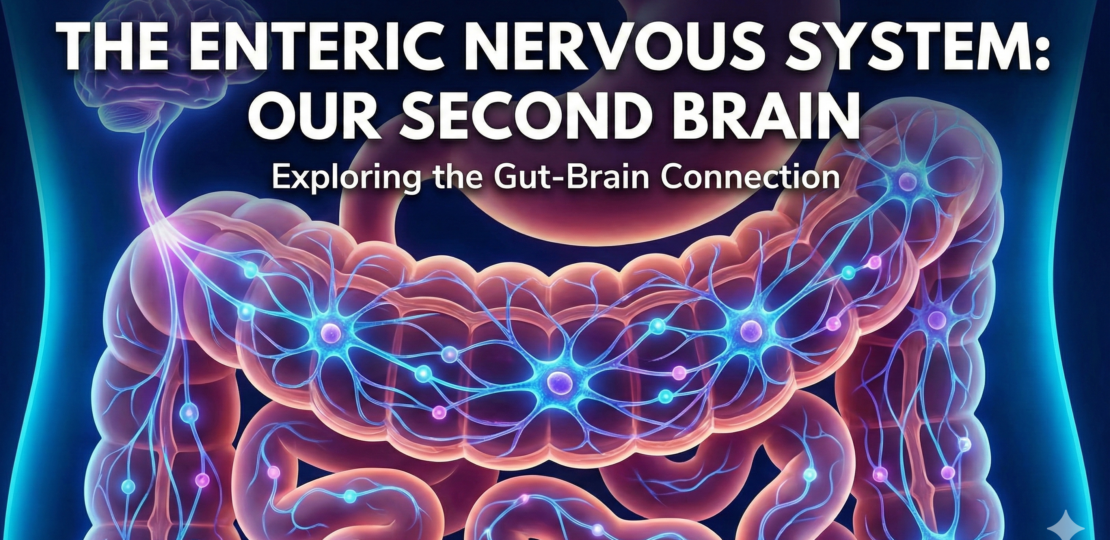
Inside your digestive tract lives a dense network of neurons—around 100 million of them. That’s more than in your spinal cord. This network is called the enteric nervous system (ENS), and it operates so independently that scientists often nickname it the “second brain.”
It doesn’t think about calculus or write poetry. But it does coordinate digestion with remarkable autonomy. It regulates muscle contractions that move food along. It controls enzyme secretion. It manages blood flow. Even if the vagus nerve connecting it to the brain were cut, the ENS would still function. That’s not a puppet. That’s a semi-autonomous biological control center.
Here’s where it gets psychologically intriguing. The ENS communicates constantly with your central nervous system through what’s called the gut-brain axis. Roughly 90% of the body’s serotonin—a neurotransmitter often associated with mood—is produced in the gut. Now, serotonin in the gut doesn’t directly equal happiness, but it does influence signaling patterns that affect mood, stress, and even decision-making. That uneasy feeling before an exam? The flutter before a difficult conversation? Those sensations are neural conversations between brain and intestine.
This changes how we think about emotion. We tend to locate feelings “in the head,” but physiology refuses to cooperate with that neat model. Emotions are distributed processes. Your body is not a passive container for thought. It participates. It votes.
The philosophical twist is almost funny: you are not a brain driving a body. You are a coalition of systems negotiating in real time. Your gut has opinions. Your heart rhythm sends data. Your immune system whispers chemical advice. Consciousness sits on top of a biological parliament. And sometimes, wisdom really does start in the stomach.
RELATED POSTS
View all