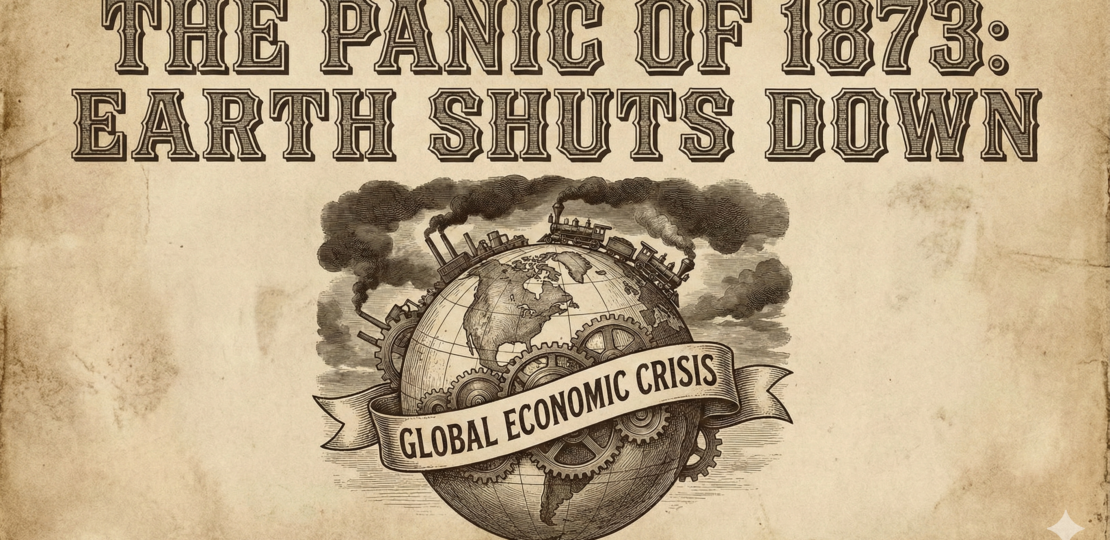
Picture the 1800s: trains stretching across continents, new cities rising out of dust, and investors throwing money at anything that looked vaguely like progress. It felt like the world was running on pure optimism. Then, in 1873, someone yanked the plug.
The Panic of 1873 began with a single bank collapse in Vienna—Credit Mobilier’s European cousin, soaked in speculative railroad investments. Think of it as the 19th-century version of betting your life savings on a startup that promises teleportation. When the Austrian bank fell apart, the shock raced across Europe and hopped the Atlantic. Within days, major U.S. banks shut their doors, railroads went bankrupt, and factories discovered that “we’ll pay you next week” wasn’t a business model.
Economists today would call it the world’s first global depression. What made it so remarkable wasn’t just how fast it spread—it was how interconnected everything had become. Railroads depended on steel mills. Steel mills depended on banks. Banks depended on investors who depended on rumors that depended on other rumors. The whole thing was basically a 19th-century Rube Goldberg machine held together by hope, telegraphs, and moustache wax.
The deeper cause was overexpansion. Railroads had been laid across the U.S. like a toddler with a crayon—enthusiastic, ambitious, and utterly unconcerned with costs. When reality finally arrived with a clipboard and asked to see the receipts, the economy panicked. Unemployment soared. Construction froze. Even governments wondered whether gold-backed currencies were helping or quietly choking everything.
Yet as jarring as it was, the Panic of 1873 reshaped economies for the better. It pushed nations to rethink monetary policy, forced companies to face the dangers of oversized speculation, and showed the world that global markets were now tied together like one big, occasionally misbehaving creature.
Studying it today feels like reading the prequel to every modern financial crisis. It’s a reminder that booms and busts aren’t accidents—they’re part of the strange, rhythmic heartbeat of capitalism, pulsing across centuries, teaching each generation the same lesson in a brand-new outfit.
RELATED POSTS
View all