Modern politics is not driven only by policies, budgets, or laws. Increasingly, it is driven by symbols. A leader visiting a disaster site, a politician eating at a roadside stall, a carefully chosen slogan, a color associated with a movement, a single photograph from a rally — these moments often carry more emotional weight than pages of policy documents. Politics has always involved symbolism, but in the age of television and social media, symbolism has become one of the central battlegrounds of power.
This happens because human beings rarely process politics through spreadsheets and statistics alone. Most people experience politics emotionally before they experience it intellectually. Symbols simplify complex realities into something instantly understandable. A hardhat can symbolize industrial growth. A rural village visit can symbolize humility. A massive rally can symbolize momentum and inevitability. Whether these symbols fully reflect reality becomes almost secondary; what matters is the emotional narrative they create.
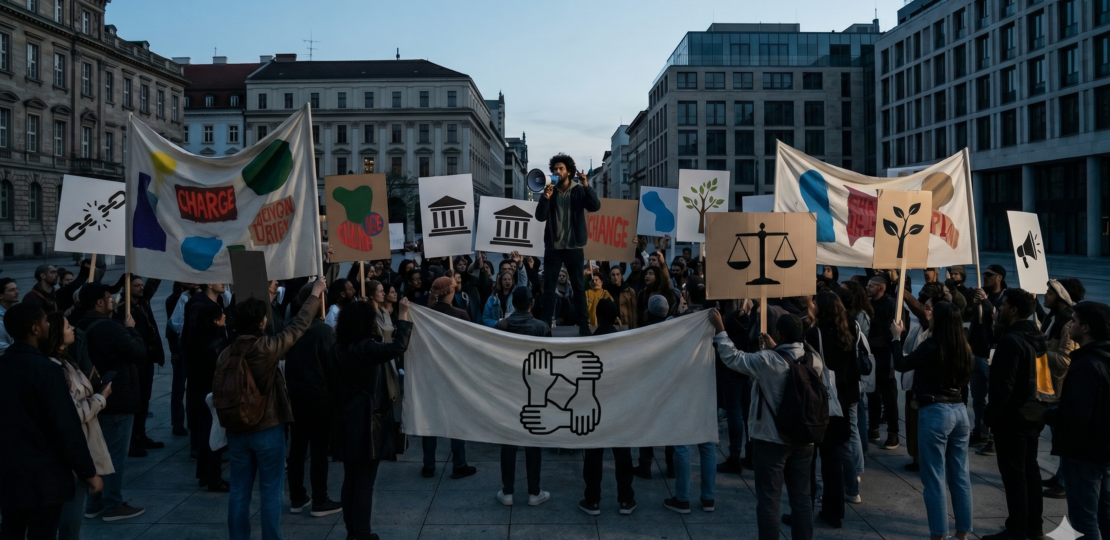
Political symbolism also shapes identity. Supporters are not just backing a tax policy or infrastructure project — they are often attaching themselves to a story. That is why symbols become fiercely defended. Flags, gestures, campaign songs, slogans, and even styles of speaking begin carrying emotional significance beyond their literal meaning. Over time, political movements stop being purely ideological and start becoming cultural ecosystems with their own aesthetics, language, and rituals.
Social media has accelerated this transformation dramatically. Earlier, political narratives were built over speeches, interviews, and newspaper editorials. Today, a ten-second clip can define public perception for weeks. Politicians therefore operate in a world where visual moments matter immensely. A single symbolic act can appear authentic and inspiring to supporters while appearing performative and calculated to critics. Politics increasingly rewards leaders who understand image construction as much as governance itself.
There is a danger in this evolution. When symbolism becomes too dominant, substance can slowly weaken underneath it. Governments may prioritize optics over long-term policy because visuals generate faster political rewards. Public debate risks becoming centered around moments rather than systems, personalities rather than institutions. Yet symbolism cannot simply be dismissed as meaningless theater either. Symbols are powerful precisely because they communicate values, identity, and emotion in ways data often cannot.
In the end, the politics of symbolism reveals something fundamental about democracy itself: people do not merely vote for administrations. They vote for narratives about who they are, what the nation represents, and what future feels emotionally believable. Political power therefore depends not only on governing reality, but on shaping the symbols through which reality is understood.
RELATED POSTS
View all