Welcome back. This is chapter 16 of the Psychology of Money. We are 80% of the way through, and have 4 chapters left. This one talks about how comparison is detrimental to investing.
Chapter 16: You & Me
One of the most expensive mistakes in finance is assuming everyone is playing the same game. They aren’t. They never were.
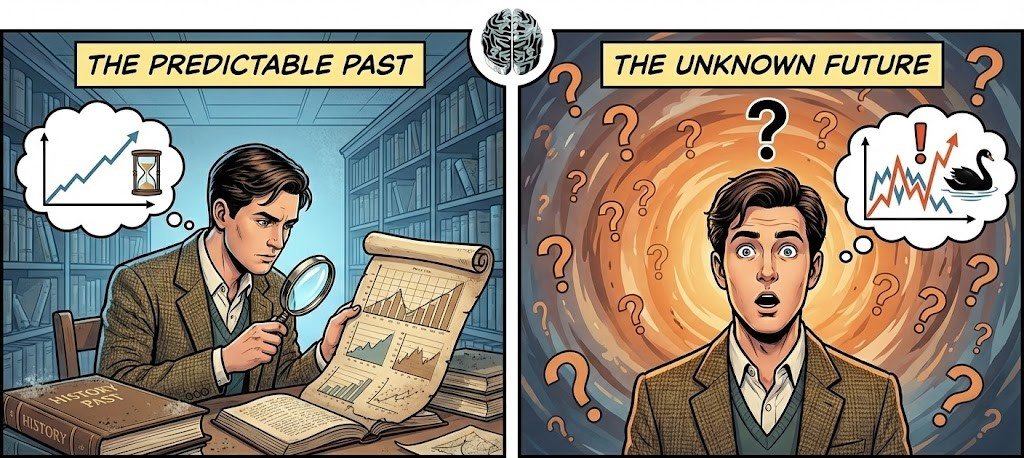
The fear doesn’t usually start with greed. It starts with something more corrosive: the fear of missing out, paired with the discomfort of feeling dumb. When someone else is winning loudly—posting gains, celebrating timing, narrating their brilliance—it creates a subtle pressure. Staying patient suddenly feels like stupidity. Switching feels like intelligence. That emotional flip is where long-term investors quietly abandon their own plans and step into someone else’s arena.
Bubbles thrive in this confusion. They aren’t built only by reckless people or outright fools. They are built by a mix of investors—some fully aware, many not—who are playing different games under the illusion that there’s one correct move. Short-term traders hope to exit before the collapse. Long-term investors convince themselves they can behave like short-term traders “just this once.” Most don’t realize they’ve changed games until the rules punish them.
The damage comes from comparison. Media, peers, and ego all conspire here. You compare your steady, boring progress to someone else’s spectacular short-term outcome and conclude you’re doing something wrong. But what you’re really comparing are incompatible timelines. A return that is impressive over six months can be meaningless—or disastrous—over six years. Yet the market doesn’t announce which time horizon each success belongs to.
This is why advice in finance is so dangerous when stripped of context. When someone says “buy this stock,” they aren’t speaking to you. They don’t know your time horizon, your emotional tolerance, your obligations, or what failure would cost you psychologically. A price that makes sense for someone planning to sell in two years may be irrational for someone planning to hold for twenty. There is no single rational price—only prices that fit specific games.
It is possible to temporarily play another game. But that path demands two rare skills: the ability to analyze clearly under excitement, and the discipline to know exactly when to switch back. Most people overestimate their capacity for both. That’s why it’s often easier—and safer—to treat the idea as a mistake altogether. Not because it’s impossible, but because the cost of being wrong is far higher than the reward of being right.
Finance punishes imitation more harshly than ignorance. The moment you start measuring your outcomes against people playing a different game, you import their risks without inheriting their advantages. Staying in your lane isn’t about humility or discipline alone—it’s about survival. And survival, in the long run, quietly outperforms brilliance borrowed from someone else’s playbook.
RELATED POSTS
View all