Right now, your shirt is touching your skin.
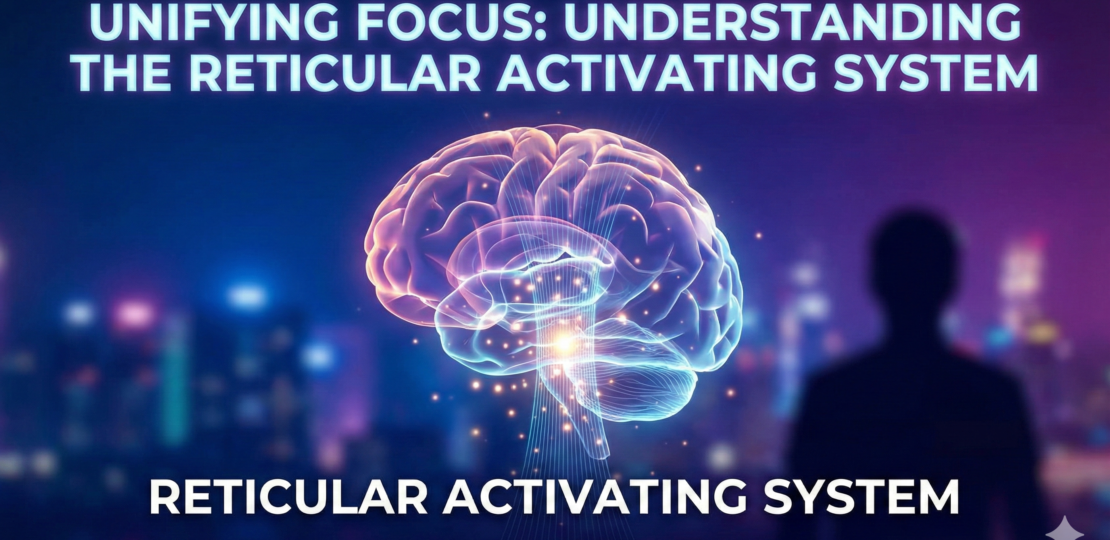
You weren’t thinking about it a second ago. Now you are. And in a few seconds, you’ll forget again. That quiet on–off switch of awareness is partly governed by a network in your brainstem called the Reticular Activating System (RAS). It’s not a single structure but a web of neurons in the reticular formation that acts as a gatekeeper for attention.
Every second, your senses bombard your brain with millions of bits of information—temperature shifts, background noise, visual details, internal sensations. If you consciously processed all of it, you’d freeze. The RAS filters the flood. It decides what gets promoted to conscious awareness and what stays backstage.
Here’s the fun experiment. Decide you want to buy a specific car model. Suddenly, you see that car everywhere. The world didn’t change. Your filter did. The RAS tags what’s “important” based on goals, fears, novelty, and emotional relevance. It tunes your perception to match your priorities.
This is powerful—and dangerous. Because the RAS doesn’t just filter neutral information. It can amplify confirmation bias. If you believe people dislike you, your brain will preferentially notice ambiguous cues that support that story. If you believe opportunities exist, your filter starts spotting them. The nervous system quietly collaborates with belief.
The deeper insight is almost unsettling: you don’t experience reality raw. You experience a curated version of it. The RAS is less a camera and more a spotlight operator. What it illuminates feels like “the world.” What it dims might as well not exist.
Your nervous system is not merely reacting to reality—it is actively constructing the slice of reality you get to see. And that means changing what you consistently focus on doesn’t just feel different. It literally alters the version of the world your brain presents to you.
RELATED POSTS
View all