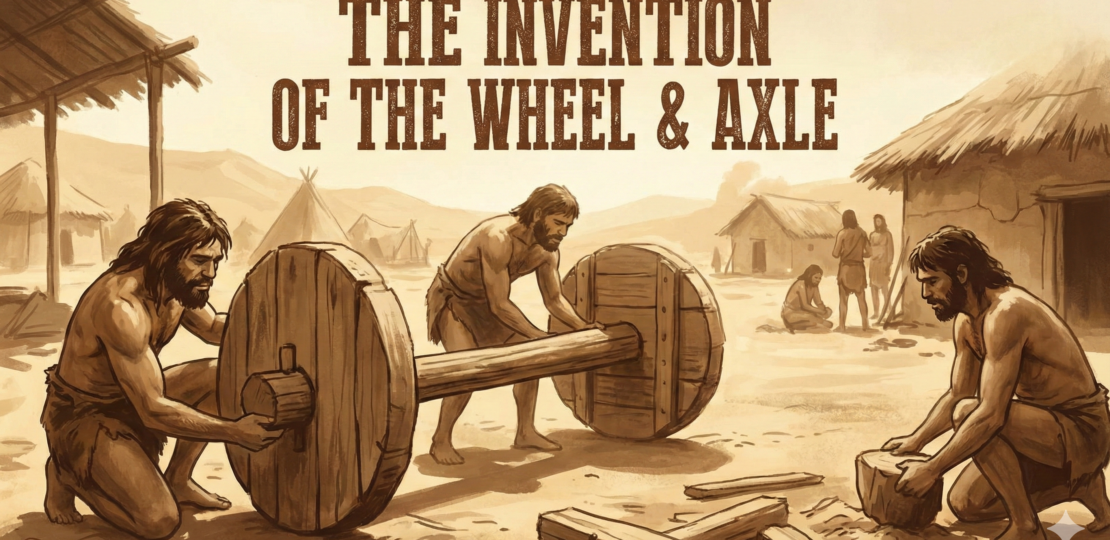
The wheel is so familiar it’s easy to miss how strange it is. A round object that turns friction into cooperation. Add an axle—a fixed partner—and suddenly motion stops being a wrestling match with the ground. It becomes something you can guide, repeat, and scale. Civilization rolls forward on this pairing.
Before the wheel and axle, movement meant dragging. Energy was lost to friction at every inch. The wheel didn’t remove friction; it relocated it to a controlled interface, the axle, where materials and lubrication could tame it. That shift—concentrating losses instead of spreading them—was a quiet engineering masterstroke.
Engineers learned quickly that not all wheels are equal. Diameter sets speed and effort. Axle thickness balances strength and friction. Bearings emerge when wear becomes intolerable. Each refinement keeps the same idea intact while pushing its limits. From carts to turbines to hard drives, the principle repeats with different costumes.
The wheel and axle also taught engineers something subtle about systems. Progress doesn’t always mean eliminating resistance. Sometimes it means deciding where resistance is allowed to exist. Control matters more than perfection.
Simple inventions endure because they frame problems in the right way. The wheel and axle didn’t conquer motion. They made motion negotiable—and that was enough to change everything.
RELATED POSTS
View all