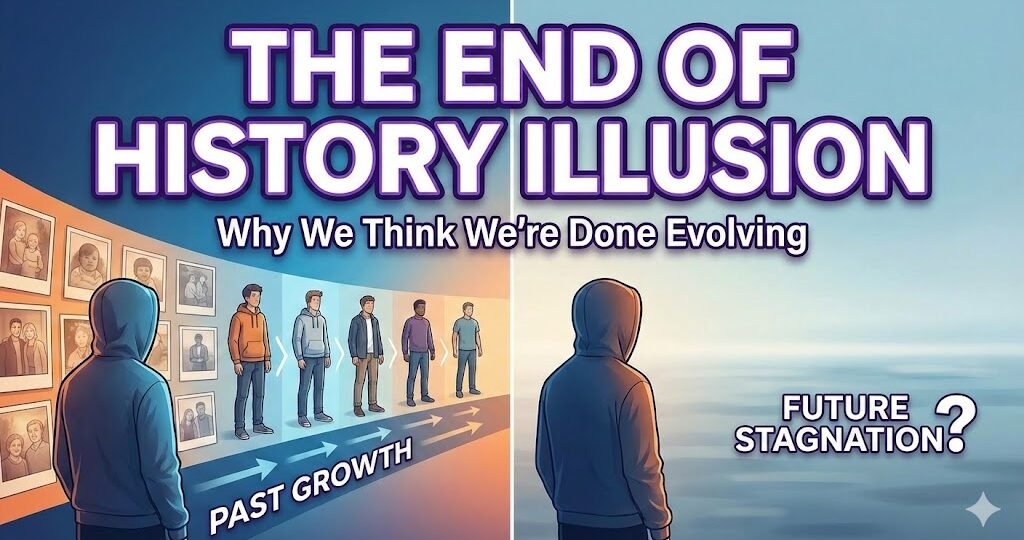
The End of History illusion is everywhere. Everyone falls for it, and almost no one realizes they do.
The illusion is simple in theory. It is the belief that we have changed a lot in the past, but will change very little in the future. You can clearly see the difference between yourself at 15 and at 30, yet you insist you’ll be essentially the same person at 45. That’s the idea. The problem is that it’s false.
So why does this happen? First, evidence of the past exists—memories, photos, old opinions, abandoned interests. We have a concrete grasp of how we changed before, something we simply don’t have for the future. Second, the brain is wired for continuity. Faced with an unknown future, it fills the gap with today’s preferences, because that path feels smooth and uninterrupted. Add to this an internal bias—often called present bias—where we overweight what feels real now. The car we drive feels more precious than it objectively is. The phone we use feels more important than it actually is.
The irony is sharp. Every past version of ourselves believed it was the final version—and every time, it was wrong. Think of data storage in the 1990s. A few hundred megabytes once sounded excessive. Then a gigabyte felt impossible. Then terabytes were unthinkable. Today, we casually buy terabytes of cloud storage—often not even physical—to store massive video files, some larger than an entire hard drive from a few decades ago. The more dangerous irony is this: even though we know, intellectually, that people change throughout life, we still fall for the illusion.
The consequences are subtle but serious. People begin making long-term decisions based on present preferences. You might love physics in high school, enjoy it consistently for years, and decide to make it your career—without realizing that at 28 or 29, you may still like physics, just not enough to build your life around it. You might pivot entirely, even come to dislike it. The point isn’t pessimism. It’s uncertainty. You don’t actually know where your future self’s deepest interests will lie.
This isn’t just an individual problem. Entire generations believe they are the final product—the most evolved, morally clear, fully informed version of humanity. And yet, discovery after discovery continues to reshape how we understand the world.
It’s strange how clearly we can see the path from past to present, and how easily we turn a blind eye from the present to the future.
RELATED POSTS
View all

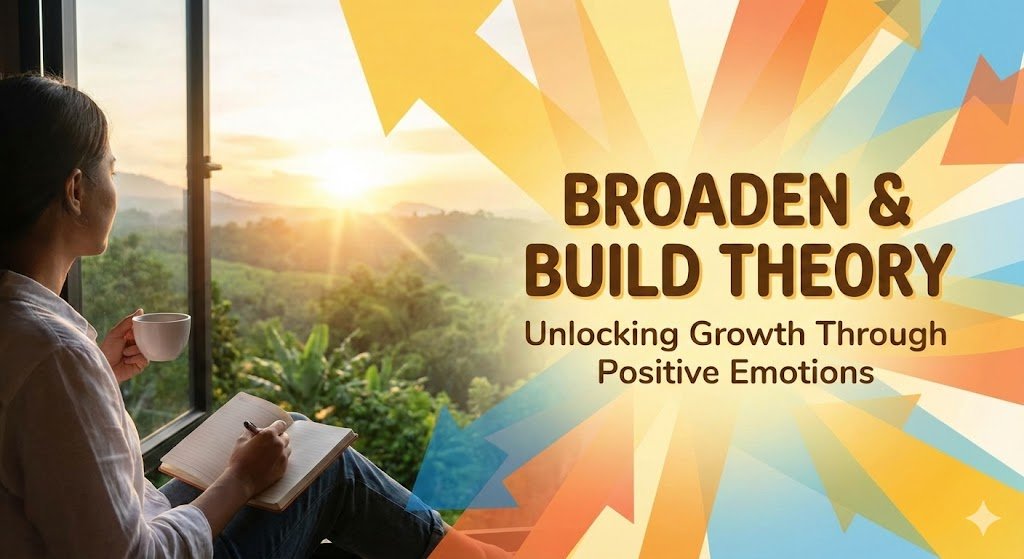
Feeling Good is much more than a mood enhancement: The Broaden-and-Build Theory
January 9, 2026 | by Venkat Balaji