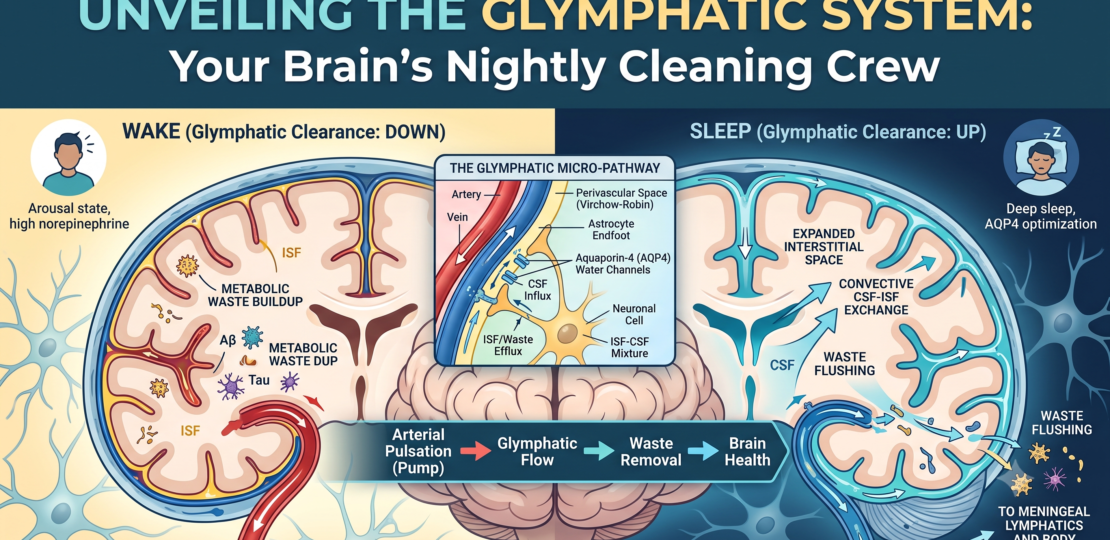
For centuries, sleep was viewed primarily as a time for rest. Muscles recovered, energy was restored, and memories were consolidated. But in 2012, neuroscientists uncovered something entirely unexpected: while we sleep, the brain activates a cleaning system that is largely inactive during waking hours.
Known as the glymphatic system, this network acts like a microscopic waste disposal system. As we fall into deep sleep, brain cells shrink slightly, creating larger spaces between them. Cerebrospinal fluid then flows through this expanded network, washing away metabolic waste that accumulates during the day—including proteins such as beta-amyloid and tau, which have been linked to Alzheimer’s disease. It is remarkably similar to how the body’s lymphatic system removes waste from other tissues, except the brain appears to perform most of this cleaning only when we are asleep.
The discovery has reshaped the way neuroscientists think about sleep deprivation. Missing sleep is no longer viewed simply as a cause of fatigue or reduced concentration. It may also mean the brain has less opportunity to clear away the by-products of its own activity. Researchers are now investigating whether improving sleep quality could slow cognitive decline, reduce the risk of neurodegenerative diseases, or even enhance long-term brain health. While many questions remain unanswered, one idea is becoming increasingly clear: sleep is an active maintenance process, not a passive shutdown.
This shift in perspective carries a powerful implication. Every night, the brain pauses many of its waking activities to perform one of its most essential engineering tasks—cleaning itself. The next time sleep feels like an unproductive time, it is worth remembering that some of the most important work the brain does happens precisely when consciousness disappears.
RELATED POSTS
View all