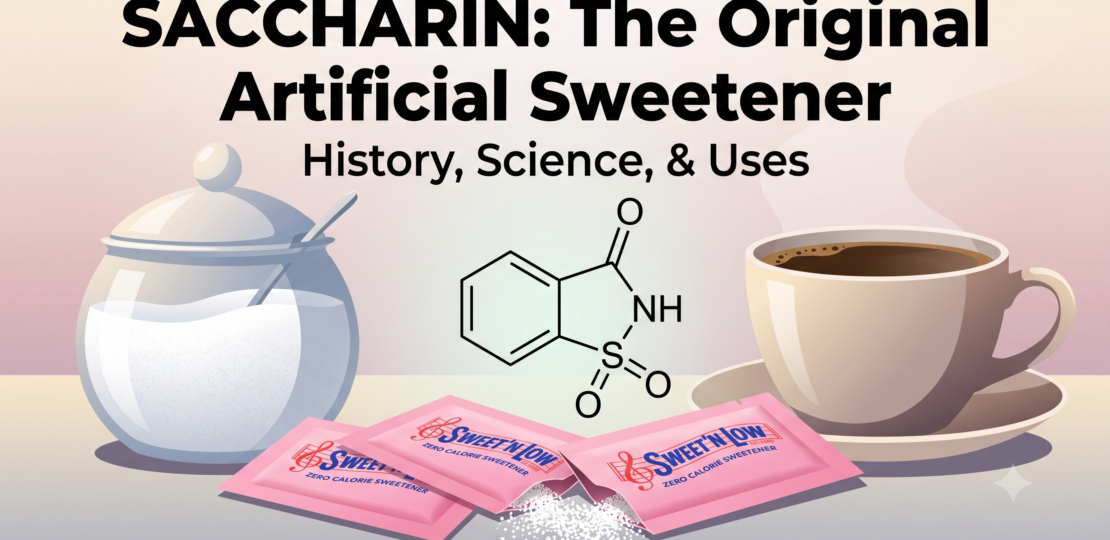
In the autumn of 1879, chemist Constantin Fahlberg left his laboratory at Johns Hopkins University after another long day studying compounds derived from coal tar. Like many exhausted researchers, he skipped one important step before dinner.
He forgot to wash his hands.
Halfway through his meal, Fahlberg noticed that his bread tasted strangely sweet. At first, it made no sense. Bread wasn’t supposed to taste like sugar. Curious, he began tasting everything on the table. The sweetness wasn’t coming from the food at all—it was coming from his fingers.
Most people would have washed their hands and moved on. Fahlberg rushed back to the laboratory instead. He painstakingly tested every compound he had worked with that day until he identified the source: a previously unknown substance that was hundreds of times sweeter than sugar. That compound became saccharin, the world’s first artificial sweetener.
The timing could not have been better. During both World Wars, when sugar was rationed across many countries, saccharin became an important substitute. Decades later, it opened the door to an entirely new industry of low-calorie sweeteners, influencing everything from soft drinks to diabetes management. Today, although newer sweeteners exist, saccharin remains one of the longest-lasting products of accidental chemistry.
The discovery also sparked controversy. Fahlberg patented saccharin without including Ira Remsen, the Johns Hopkins professor in whose laboratory the research had been conducted. Remsen was furious, later remarking that Fahlberg was “a scoundrel.” The scientific breakthrough became a lesson not only in curiosity, but also in the ethics of credit and collaboration.
The story of saccharin illustrates an unusual truth about discovery. Nature rarely announces its secrets with fanfare. Sometimes they arrive as something as ordinary as an unexpected taste at dinner. The difference between coincidence and innovation often lies in whether someone chooses to ask, “Why did that happen?” instead of simply enjoying the sweetness and moving on.
RELATED POSTS
View all