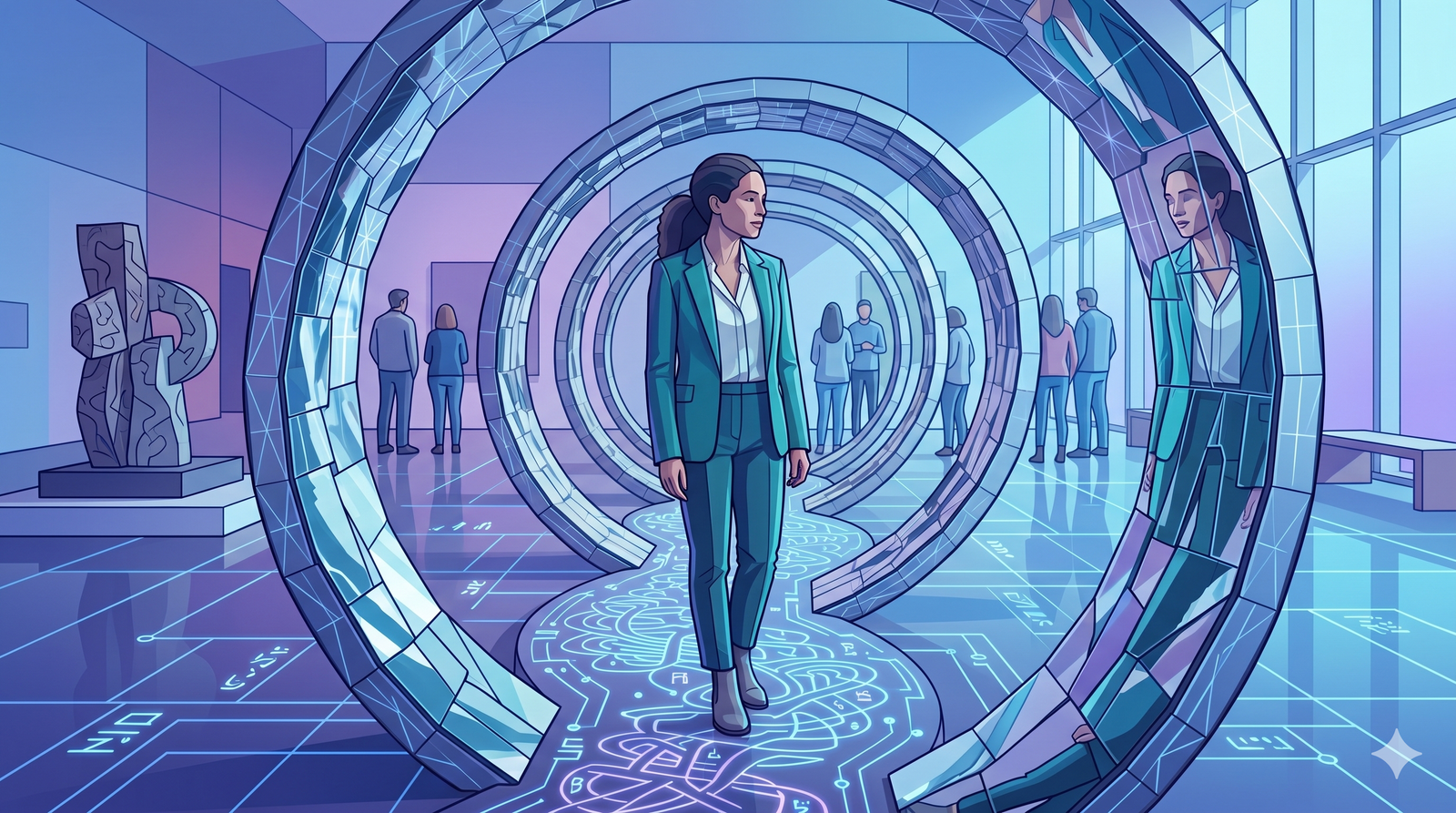
For decades, neuroscientists believed the brain stored memories much like a library: experiences were filed away, waiting to be retrieved when needed. Recent breakthroughs, however, suggest something far more dynamic. The brain may organize memories less like books on shelves and more like locations on a map, constantly navigating through an internal landscape of ideas, experiences, and emotions.
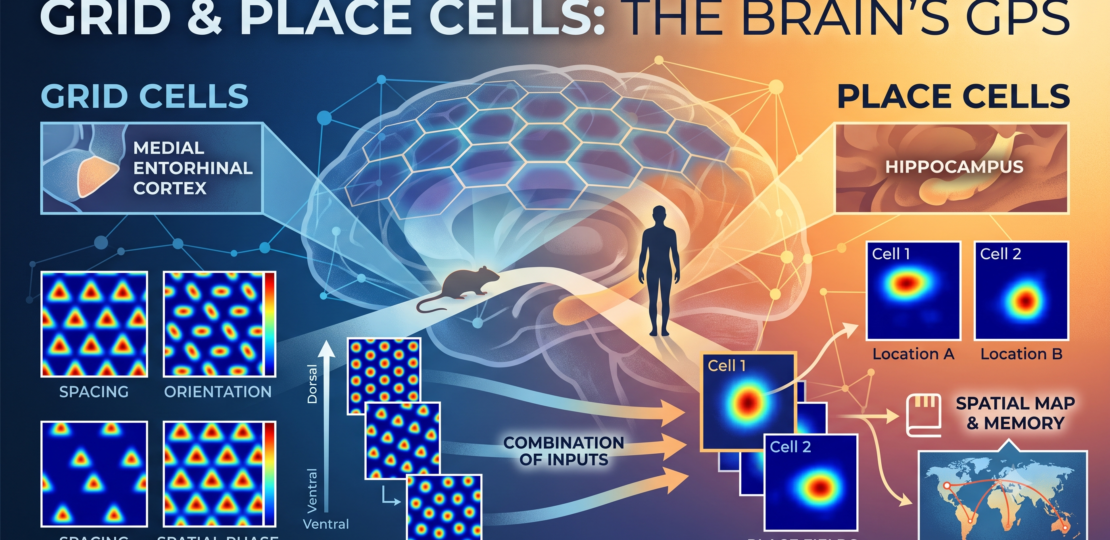
This realization stems from research on grid cells and place cells, discoveries that earned the 2014 Nobel Prize in Physiology or Medicine. Originally identified as the brain’s navigation system, these specialized neurons allow us to determine where we are and how to move through physical space. More recently, neuroscientists have found evidence that the same circuitry also helps us navigate abstract spaces. Instead of representing streets or landmarks, these mental maps may organize concepts, social relationships, memories, and even emotions. In other words, when searching for the right word or recalling a childhood event, the brain may literally be navigating an internal cognitive landscape.
This idea has profound implications for psychology. It may explain why seemingly unrelated memories suddenly resurface, why learning is often easier when new ideas connect to existing knowledge, and why visual diagrams, concept maps, and analogies are such powerful teaching tools. Rather than memorizing isolated facts, the brain appears to build networks in which ideas occupy positions relative to one another. The richer these connections become, the easier it is to navigate from one concept to the next.
Although researchers are still uncovering how these cognitive maps function, they are already reshaping our understanding of memory, learning, and decision-making. Intelligence may depend less on the amount of information stored in the brain than on how effectively that information is organized. The greatest breakthroughs in education and psychology may therefore come not from helping people remember more, but from helping them build better mental maps.
RELATED POSTS
View all