There is an uncomfortable possibility hidden inside the Experience Machine.
Perhaps refusing it does not automatically make sense.
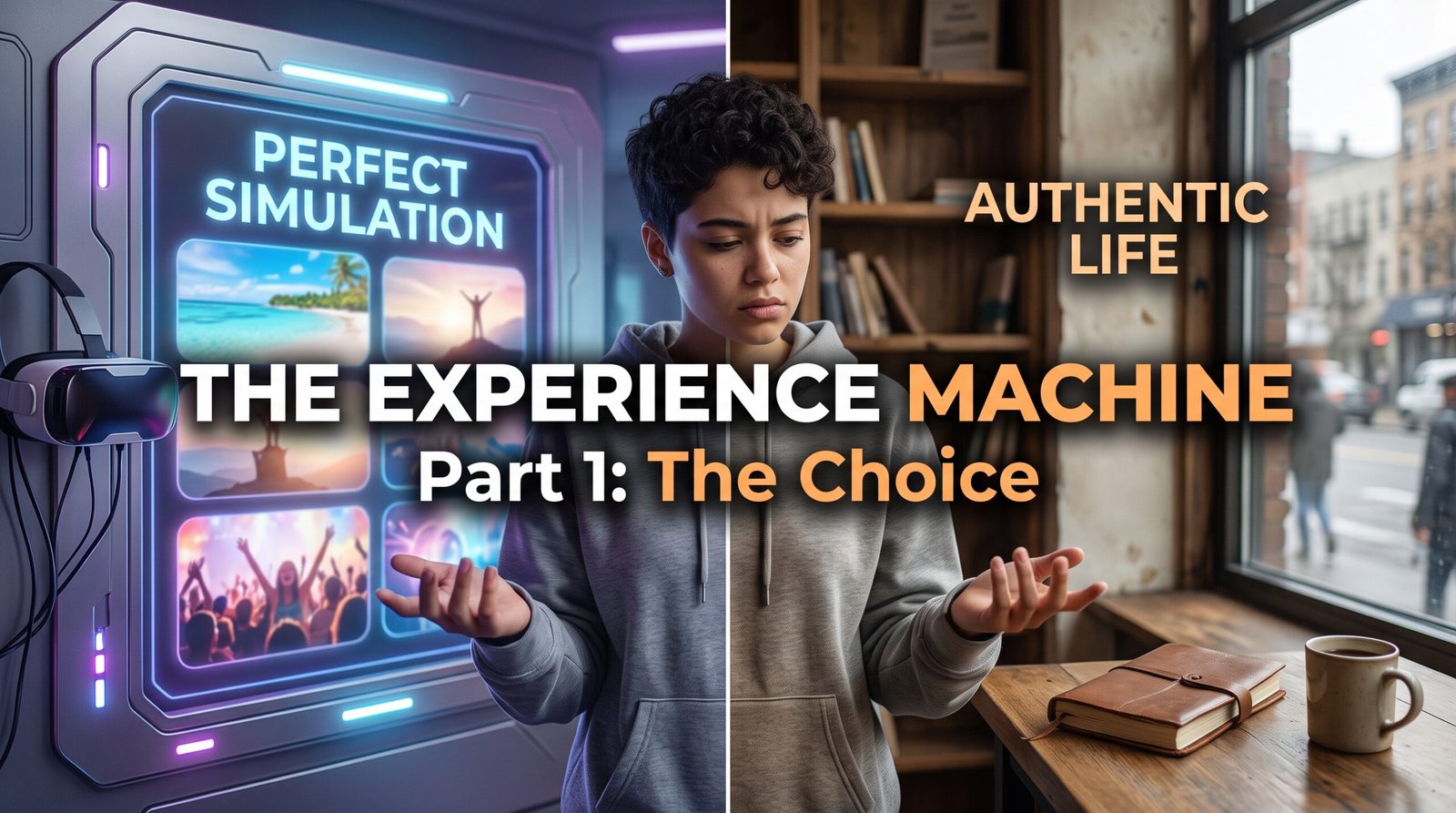
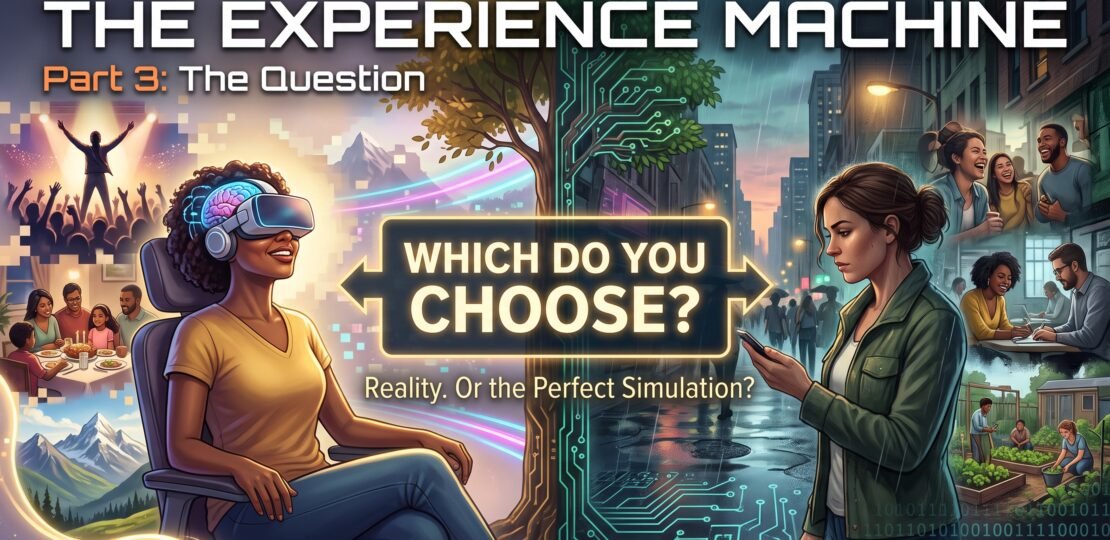
Imagine two people.
The first lives an ordinary life. They experience happiness, friendship, achievement, disappointment, and loss. Their experiences are real, but they are also limited and unpredictable.
The second enters the Experience Machine. Every experience is perfectly designed to make them happy. They believe they are accomplishing meaningful things, forming genuine relationships, and overcoming difficult challenges.
From the inside, their lives are indistinguishable.
Who is living the better life?
The obvious answer is the first person. But the Experience Machine makes that answer surprisingly difficult to defend.
After all, the second person is not feeling any less happy. They are not sitting inside the machine thinking, “This is meaningless.” They experience their life exactly as the first person experiences theirs.
So why should reality matter?
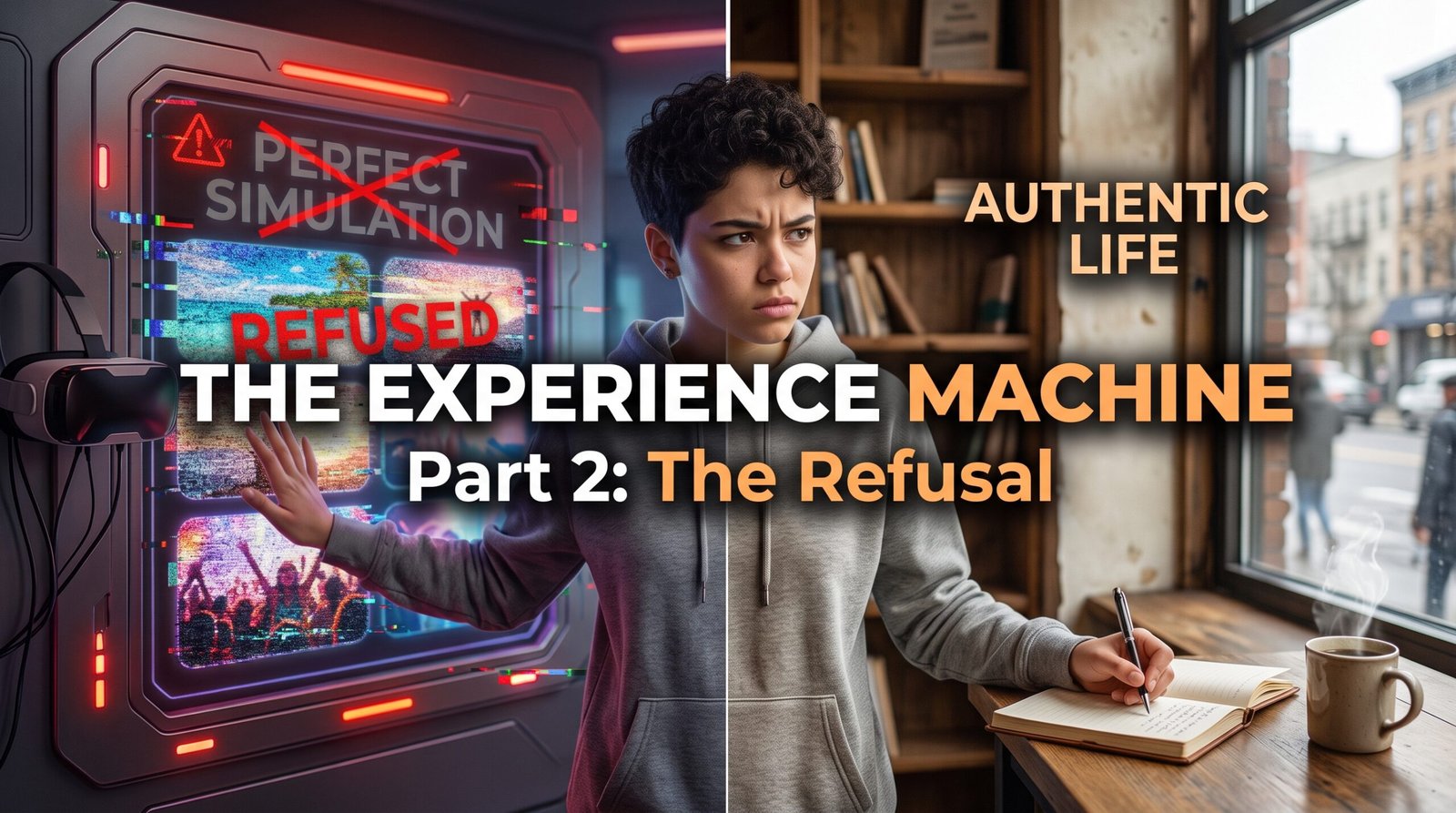
One answer is that truth itself has value.
A person might reasonably prefer knowing that their accomplishments actually happened, even if the knowledge produces no additional happiness. There is something important about having one’s beliefs correspond to reality.
Another answer is that autonomy matters.
Inside the machine, every apparent choice could be predetermined. You might believe you decided to become a scientist, but the machine simply created the experience of making that decision. You might believe you overcame adversity, but the adversity was designed for you.
You would experience freedom without necessarily possessing it.
Yet even this argument becomes complicated.
Ordinary life is hardly completely autonomous. Genetics, upbringing, society, luck, and circumstances influence our choices constantly. If some degree of illusion already exists in everyday life, perhaps the machine is merely an extreme version of something that is already happening.
And this leads to the most unsettling possibility.
What if the real world itself is not fundamentally different from the machine in the way we
imagine?
The Experience Machine assumes that there is a clear distinction between experiencing something and actually having it happen. But consciousness only ever gives us experiences. Every color, sound, emotion, memory, and sensation reaches us through the brain.
We never experience “reality” directly. We experience the brain’s representation of reality.
That does not mean the world is fake. It means that the line between reality and experience is philosophically more complicated than it first appears.
Perhaps the reason most people reject the machine is not because pleasure is unimportant. Perhaps it is because a good life contains things that pleasure alone cannot capture: truth, agency, relationships, achievement, struggle, and connection with a world that exists independently of us.
But there is no universally accepted formula for how much each should matter.
That may be the real power of Nozick’s thought experiment.
The machine does not tell us what a good life is.
It removes almost everything except happiness—and then asks whether happiness is enough.
If the answer is no, the next question becomes much harder:
What, exactly, are we looking for when we say we want a good life?
RELATED POSTS
View all